
Lightweight CRM Alternative for Small Teams
Most teams pick up a CRM with the best intentions, then quietly stop using it within a month. Not because they stopped caring about their relationships, but because the tool was never built for the way they actually work.
Traditional CRMs are designed around sales pipelines and deal stages. They assume your contacts are leads moving toward a close. For teams managing partners, advisors, clients, and candidates, that model doesn't fit. The result is a system everyone stops updating because it stopped reflecting reality.
A lightweight CRM alternative for small teams is a contact and relationship management tool built around simplicity rather than features: shared contacts, follow-up reminders, and relationship tracking without the pipeline overhead or admin burden of a traditional CRM. Unlike HubSpot or Salesforce, which are optimised for sales teams running formal processes, a lightweight alternative is built for teams whose most important relationships don't end in a transaction.
The goal isn't fewer features. It's a different model for a different kind of work.
Why CRMs fail relationship-driven teams
Traditional CRMs are powerful tools. They're also built for a specific kind of work that most relationship-driven teams aren't doing.
1) Admin becomes the job
Most CRMs require constant upkeep: logging calls, updating pipeline stages, filling in custom fields, building reports. That overhead makes sense for a dedicated sales team with an ops person to maintain the system. It doesn't make sense for a five-person team where everyone is doing the actual work.
When admin load outweighs the value, people stop using the tool.
2) Fields and dashboards don't capture relationship reality
A CRM field for "deal stage" or "probability to close" has no useful meaning when you're managing a relationship with an advisor, an alumni, or a potential partner. The structure the tool imposes doesn't match how relationships actually develop, so teams either force it to fit or ignore the system entirely.
3) Pipeline gravity pulls everything into a deal shape
Most CRMs have one mental model at their core: a pipeline moving contacts toward a transaction. Even when you try to use them for contact management and relationship work, the defaults keep pulling you back toward deal-stage thinking. Contact scoring, lead status, opportunity value, none of these map to how relationship-driven teams operate.
4) Collaboration breaks down fast
In most CRMs, relationship context lives in individual records assigned to specific reps. When someone leaves, that context goes with them. When someone joins, they start from scratch. Teams lose relationship intelligence at exactly the moments they can least afford it.
What a lightweight CRM alternative actually needs to do
The goal isn't fewer features for smaller teams. It's a different set of priorities entirely.
A lightweight CRM alternative for relationship management needs to:
Share contacts across the team by default. Not behind permission walls or individual rep views. Everyone who needs to see a contact should be able to, without a setup step.
Track relationship context, not deal data. Notes, interactions, shared history, and follow-up reminders, not pipeline stages and close probability scores.
Stay easy enough that people actually use it. If maintaining the system takes more than a few minutes a week, most teams won't sustain it. The contact management overhead has to stay low.
Work for non-sales relationships. Clients, partners, advisors, candidates, alumni, investors — a lightweight CRM alternative has to support all of them without forcing a sales structure onto each one.
This is the gap that traditional CRMs, and even some tools marketed as "lightweight", don't fill.
How a lightweight CRM alternative works for small teams
Rolodex is built around this model. It's relationship contact management designed for teams that aren't running formal sales processes but still need a shared system for the relationships that drive their work.
1) Consolidate contacts without making it a project
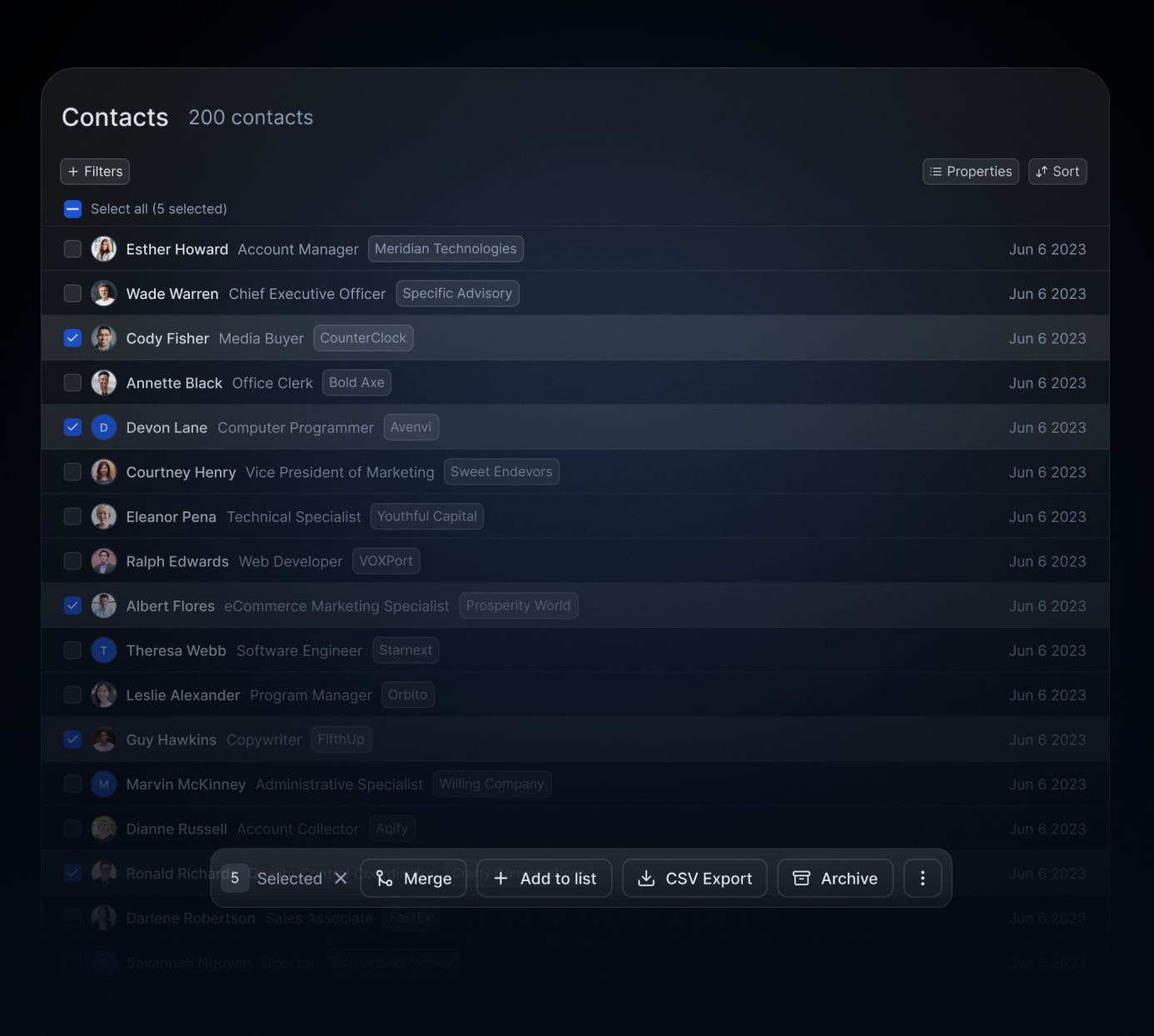
Most teams have contacts scattered across individual inboxes, LinkedIn, spreadsheets, and old email threads. A lightweight CRM alternative makes it easy to pull those contacts into a shared network your whole team can see and add to, without requiring a data migration project.
The point is a shared view of your collective network, not a perfectly maintained database.
2) Organize relationships the way you actually think
Not every contact fits the same structure. Partners are different from candidates, who are different from advisors, who are different from investors.
A lightweight CRM alternative lets you organize contacts by the categories and stages that reflect your actual relationships, not by a pipeline template built for someone else's sales process. You set the stages; the system reflects how you work.

3) Keep-in-touch that turns good intentions into a system
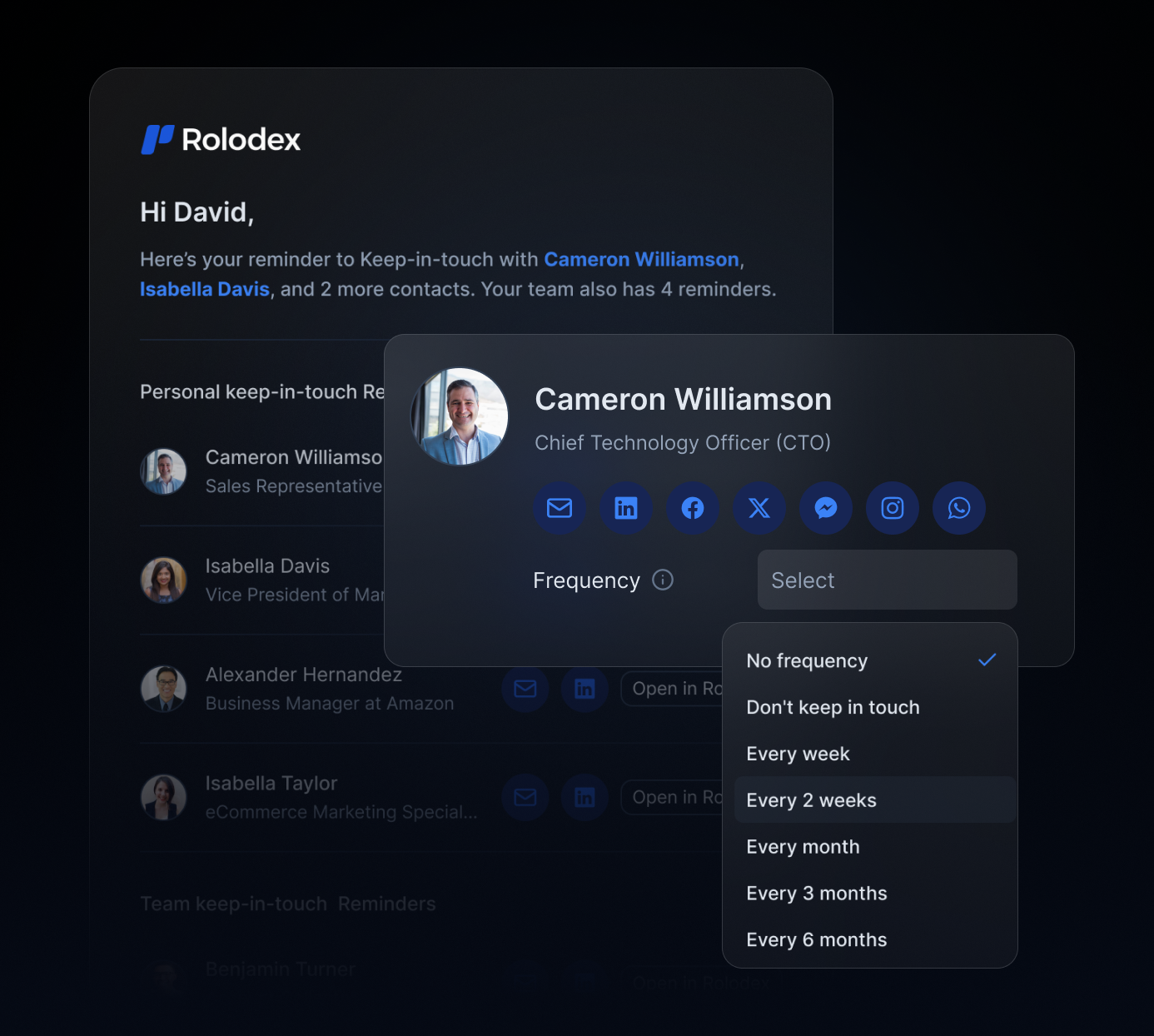
The most common relationship management failure isn't losing contacts. It's losing touch. Most teams have the right instinct (stay connected with the people who matter), but no lightweight system to catch the ones slipping through the cracks.
Keep in Touch reminders surface the contacts you haven't reached out to recently, so follow-ups happen consistently without a manual tracking spreadsheet.
4) Board views for contact management without the overhead
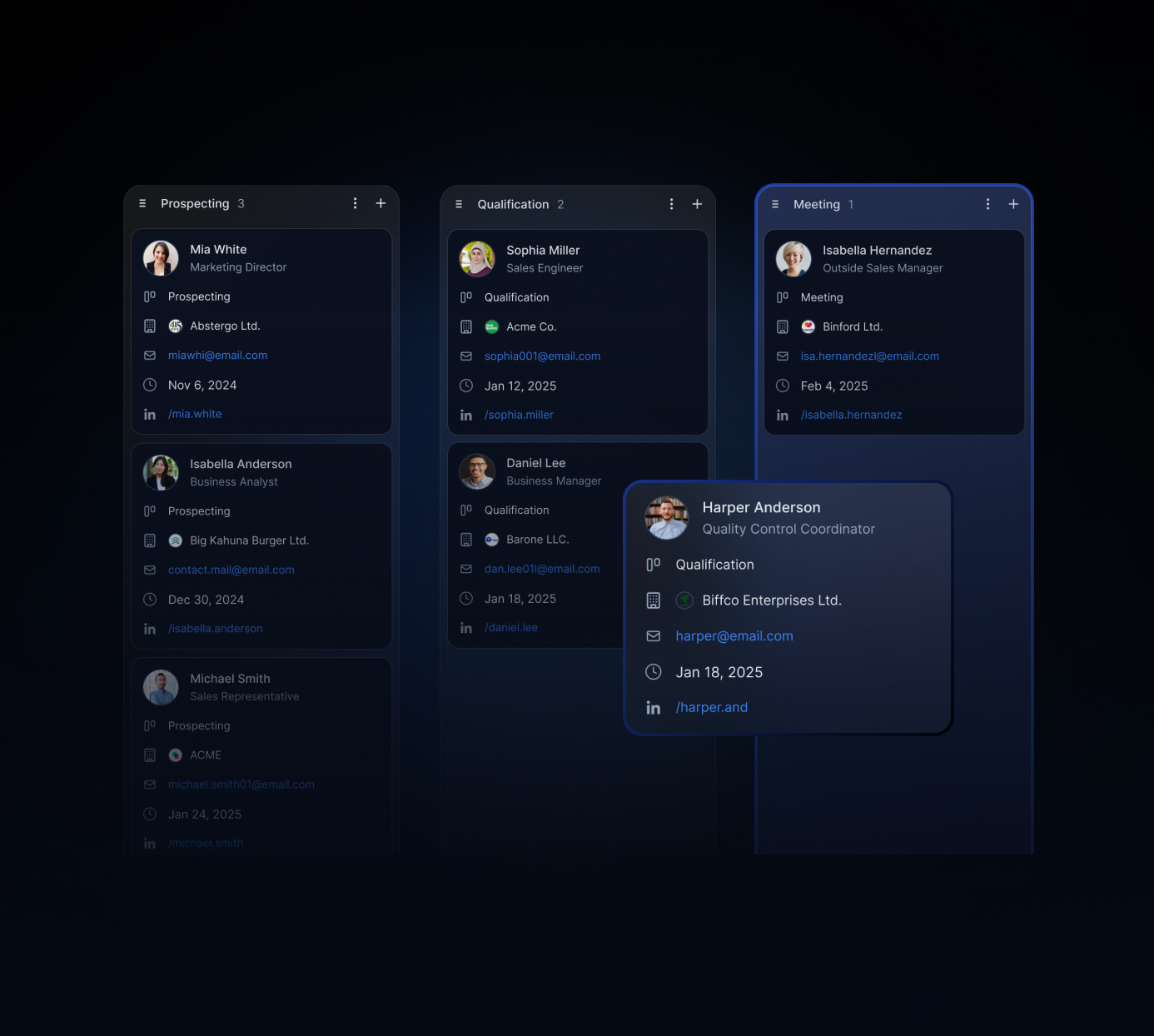
Board Views let you organize contacts across stages that make sense for the relationship, not for a deal: Warm, Active, Dormant, Re-engage. Or a Partner Targets board moving from Intro to Exploring Fit to Active. The kanban format is familiar; the logic behind it is relationship-first.
This is one of the clearest ways a lightweight CRM alternative differs from a traditional CRM: the visual structure serves contact management, not pipeline management.
5) A shared team timeline that makes collaboration feel natural
When a teammate takes a call, adds a note, or updates a contact, that activity is visible to the whole team. No more asking "who last spoke to them?" or starting over because the person who owned the relationship has moved on.
The Team Timeline turns individual relationship context into shared organizational memory, without any extra steps.
6) Map View for location-based relationship context
For teams with distributed contacts, or those planning in-person outreach, Map View surfaces where contacts are located. Useful for event planning, local meetings, or understanding the geographic shape of your shared network.

Lightweight CRM vs. full CRM: when each makes sense
A lightweight CRM alternative isn't the right tool for every team. The tradeoffs are worth naming clearly.
Full CRM (HubSpot, Salesforce) | Lightweight CRM alternative | Spreadsheet | |
|---|---|---|---|
Best for | Sales pipelines, deal tracking | Relationship management, contact management | Very early stage, solo use |
Setup time | Days to weeks | Under an hour | Minutes |
Team visibility | Per rep, configurable | Shared by default | Manual sharing |
Relationship context | Per-deal record | Shared notes, timeline | Manual notes |
Follow-up system | Sales task system | Keep in Touch reminders | Manual |
Admin overhead | High | Low | None, but scales poorly |
Pricing | $45–$$$+ per user | Affordable for small teams | Free |
A full CRM makes more sense when:
Your team runs a formal sales process with quota targets and pipeline forecasting
You need deep reporting on conversion rates, deal values, and revenue attribution
You have a dedicated ops or RevOps function to maintain the system
Integrations with marketing automation and billing are essential
A lightweight CRM alternative makes more sense when:
Your team manages relationships that don't end in a transaction
You want a shared network without a heavy setup process
The admin overhead of a traditional CRM is the reason nobody uses it
Your contacts span categories (partners, advisors, clients, candidates) that don't fit a single pipeline
Most teams who switch to a lightweight CRM alternative have either tried a traditional CRM and stopped using it, or never started because they knew the overhead wouldn't match their size.
How this compares to other relationship CRM alternatives
The lightweight CRM alternatives space has a few distinct approaches. Tools like Affinity are purpose-built for relationship intelligence but priced for enterprise teams ($166/user/month). Tools like Notion give you flexibility but require building and maintaining your own system. Spreadsheets work until the team grows past two people sharing a file.
Rolodex sits in a different position: shared contact management and relationship tracking, designed for teams that want more structure than a spreadsheet and less overhead than a full CRM.
The better default for small teams
The pattern that shows up consistently: teams with a lightweight CRM alternative actually use it. The ones with full CRMs often don't.
That's not a critique of those tools. It's about fit. When the system matches how a team works, they update it. When it doesn't, they stop. A shared contact management system your team uses consistently delivers more value than a sophisticated one nobody opens.
For teams running on relationships, managing the partners, clients, advisors, and candidates who move their work forward, a lightweight CRM alternative is usually the better starting point. Simpler to set up, easier to maintain, and built around relationship management rather than pipeline management.
Start organizing your team's relationships in Rolodex, free to start