
Most CRMs don’t fail because people “don’t believe in process.” They fail because they quietly become a second job.
You start with good intentions. Then come the fields. The dashboards. The “quick” updates that always happen after the meeting (until they never do). Before long, the CRM becomes less of a relationship manager and more of an admin treadmill.
Rolodex takes a different approach: a CRM alternative that stays current without constant manual upkeep. It’s built for people-first relationship management, not pipeline gymnastics. The goal is simple: consolidate your network, automatically capture context, and keep you consistent with follow-ups, without living inside a spreadsheet or juggling reminders across five apps.
The modern relationship mess (and why it keeps happening)
If you’re busy, you already have a “relationship system.” It’s just scattered:
Contacts in multiple places (Google, iPhone, LinkedIn, inbox threads)
Calendar events that contain the real story, but vanish into the past
Notes in docs, apps, and message threads you’ll never search again
Follow-ups living in your head, which is not a reliable task manager
This leads to the most common workflow in networking: “I’ll remember later” optimism.
A relationship manager should reduce the number of places you store context, not increase it. If it requires constant manual input to stay useful, it won’t stay useful.

The “zero upkeep” setup: let your systems do the logging
A relationship manager that updates itself starts with one idea: stop asking people to manually re-create what already exists in email and calendars.
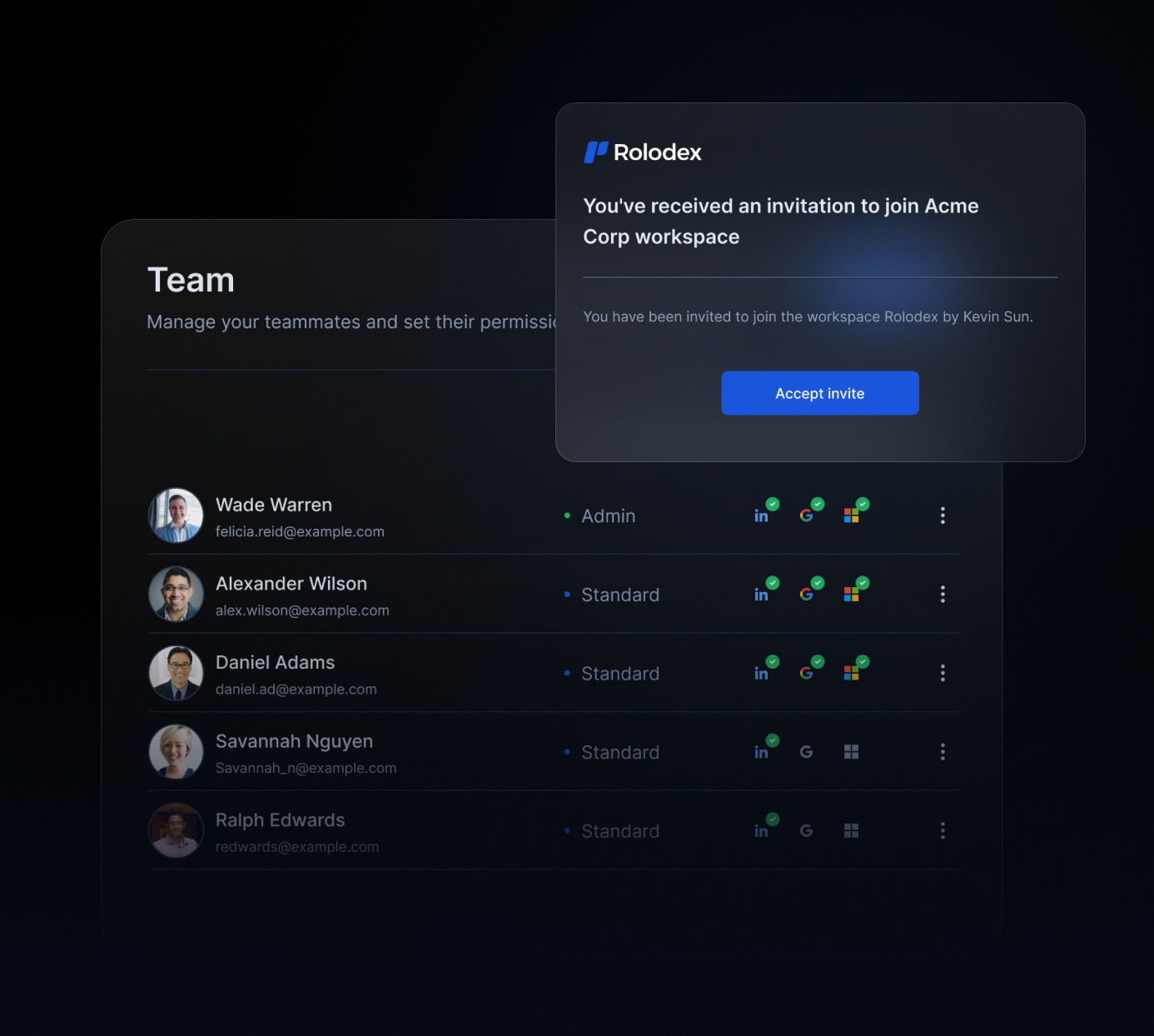
In Rolodex, the foundation is connecting the streams where your relationships actually happen:
Connect email so your conversations become part of the relationship context.
Connect calendar so meetings and touchpoints are captured automatically.
Connect LinkedIn so your network data stays fresh and your contacts don’t slowly decay into outdated job titles and old companies.
Once these are connected, Rolodex can consolidate interactions and keep your database current with far less effort. Instead of “updating the CRM,” you’re simply living your work, and the relationship layer stays aligned.
Consolidate contacts once, then stop managing duplicates forever
The first win of a low-busywork CRM alternative is consolidation.
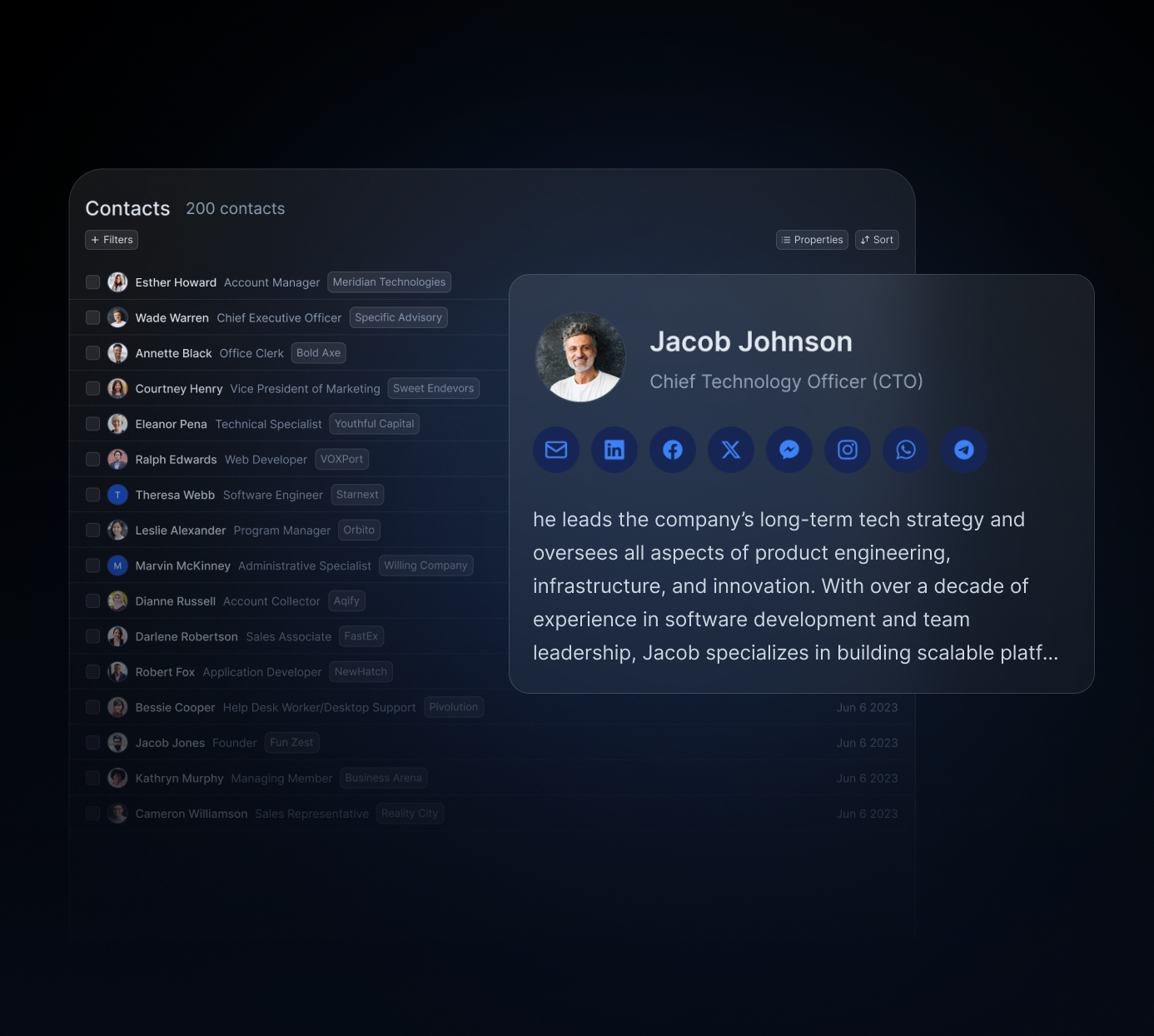
Instead of treating your network like a set of separate silos (contacts list, inbox, LinkedIn connections, calendar invites), Rolodex pulls your relationship data into one place. That gives you a single, consistent view of a person, regardless of where you last interacted.
This matters because most “CRM busywork” is really just data cleanup:
Who is this person in my contacts?
Did we talk recently?
What was the last context?
What company are they actually at now?
A relationship manager that updates itself eliminates the scavenger hunt.
Replace “fields” with Notes that capture the current truth
Traditional CRMs try to make relationships legible through structured fields. That works for deals. It’s a clunky fit for humans.
Rolodex uses Notes to capture what actually drives relationships:
What matters to this person right now
What you promised to send
What your last conversation was really about
The one detail you’ll want before the next meeting
Think of Notes as your “current truth” layer. You’re not filling out CRM fields for the sake of reporting. You’re writing down the context that makes you sharper, faster, and more intentional the next time you show up.
A practical rule: if it would make your next outreach easier, it belongs in a note.
Keep-in-Touch: consistency without mental load
The second half of the system is what prevents your network from quietly going stale.
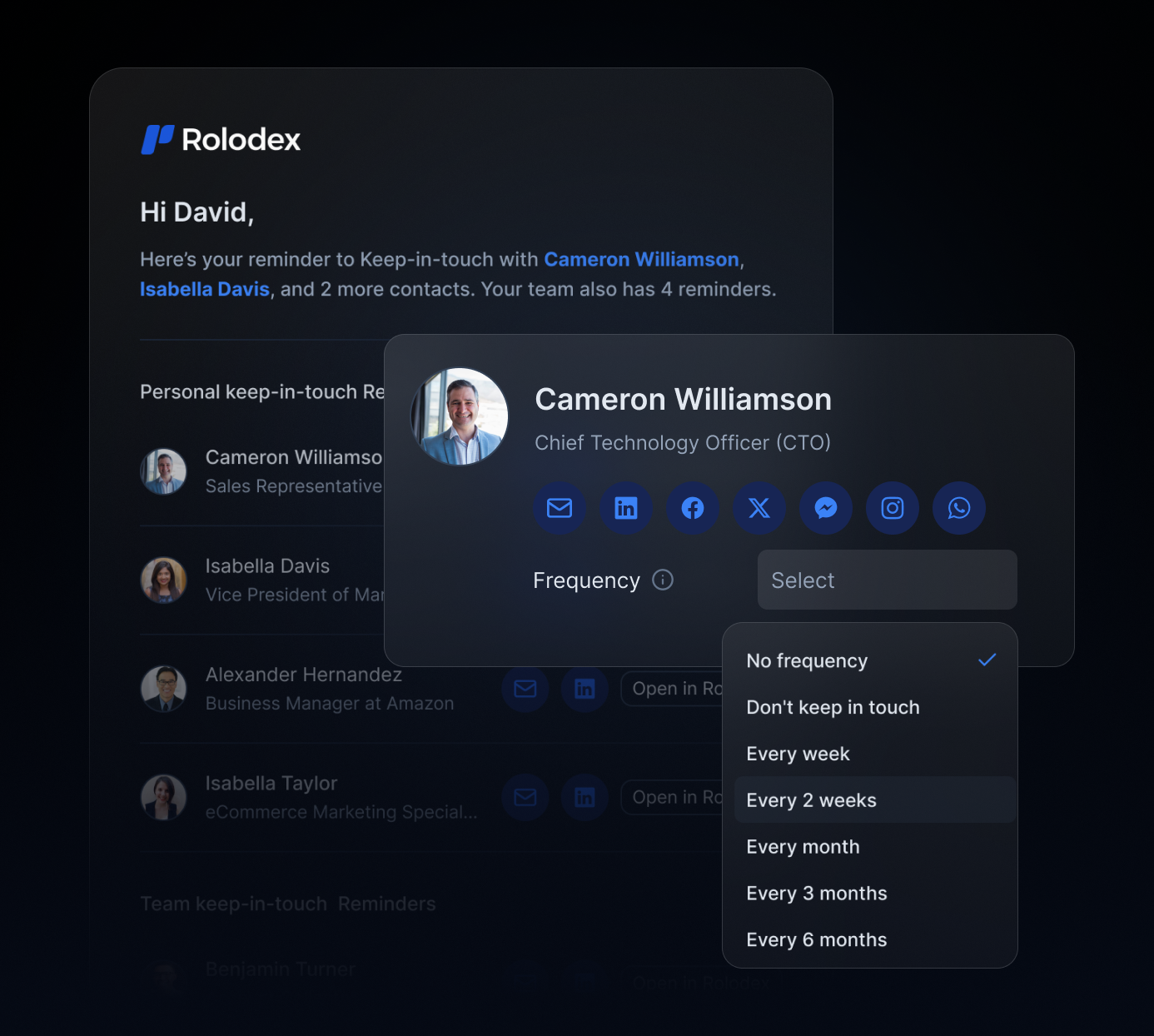
Keep-in-Touch lets you set a simple follow-up frequency for the people who matter. Weekly. Monthly. Quarterly. Whatever fits.
Then your relationship manager does the nagging for you, so you don’t have to:
You get prompted when it’s time to reach out
You stop relying on memory as your workflow
You stay consistent without building a complicated “task system” from scratch
This is where a “CRM without the busywork” becomes real. The best system is the one that keeps running on weeks when you’re overloaded.
Why this beats spreadsheets, scattered reminders, and “personal discipline”
Spreadsheets are honest tools. They’re also frozen in time.
The moment you stop updating a spreadsheet, it becomes a historical artifact. Same with reminders scattered across apps. Same with “I’ll ping them next week” mental notes.
A relationship manager that updates itself is different because it’s designed around reality:
Relationship data already exists in email and calendar
People change roles, companies, and priorities
Your bandwidth fluctuates
Consistency matters more than perfection
Rolodex is built to keep your relationship context alive even when you’re busy. Not by asking you to do more, but by removing the repetitive upkeep.
A simple weekly rhythm (that doesn’t feel like CRM work)
If you want this to become a habit without becoming a project, use a lightweight cadence:
Open Keep-in-Touch
Pick a small number of people due for follow-up
Skim their latest context
Send a short, relevant message
Add one note if something important changed
That’s it. No dashboards. No pipeline gravity. No “admin day.”
The real promise: show up like you’re always on top of it
The best relationship systems don’t make you feel organized. They make you look organized.
When your relationship manager stays current automatically, you can:
Walk into meetings with context in seconds
Follow up when you said you would
Catch changes and life events without stalking LinkedIn daily
Maintain important relationships at scale, without treating networking like a separate job
That’s what “CRM without the busywork” should mean.