If you squint, Rolodex and Attio are both trying to solve the same daily problem: your relationships are valuable, but the context around them leaks out of your brain and into a messy constellation of inbox threads, calendar invites, LinkedIn tabs, and half-remembered notes.
Where they differ is in what they believe the system should optimize for.
Attio is a modern, flexible CRM platform that lets you model your business in data: objects, attributes, lists, views, and automations. It’s built to be shaped around workflows like sales pipelines, onboarding, recruiting, and product-led growth, with strong customization at the core.
Rolodex is a relationship intelligence workspace designed around people and networks first: bringing your team’s connections and interaction history together, then making it easy to stay warm with the right people through lightweight organization and reminders, without forcing everything into “pipeline logic.”
Below is a comprehensive comparison of how each product works in practice, and which one tends to fit which kind of team.
What Attio is built to be great at
Attio is very clear about its foundation: it’s a data model you can adapt.
A configurable data model: objects, records, attributes, relationships
Attio organizes information using “objects” (think tables), filled with “records” (rows), described by “attributes” (fields). It also supports relationship attributes to connect records bidirectionally, which is crucial if you want to map deals to companies, candidates to roles, or any custom entity to another.
If your business doesn’t fit neatly into standard CRM shapes, Attio supports custom objects and relationships so you can model what matters to you.
Lists and views as the “workflow layer”
In Attio, lists are a powerful way to organize records into a specific process without changing the underlying record itself. That means you can take the same person or company record and track them in a recruiting pipeline, an onboarding workflow, or a partnership motion using list-specific attributes.
Views then control how you see and work the data. Attio supports table and kanban list views, and kanban is designed explicitly for pipeline progression with drag-and-drop stages.
Automation, workflows, and reporting
Attio leans into “CRM as an operating system.” You can create workflows (including templates and shareable access controls), connect your stack via native apps, Zapier, and API keys, and build reporting dashboards that track pipeline movement like stage changes.
Email and calendar sync, plus communication intelligence
A core part of Attio is inbox and calendar syncing. With email + calendar connected, Attio can automatically create People and Company records from your historical interactions, link people to companies, enrich data, and provide “communication intelligence” attributes like first/last interactions.
Attio also supports sending and tracking emails inside the platform, including templates and mass send (with stated limits).
Collaboration features: notes, tasks, comments, and permissions
Attio includes collaborative notes for unstructured context, tasks for reminders and to-dos, and comments/mentions across records and list entries.
On privacy and collaboration, Attio provides controls for sharing and permissions, including options around email sharing and keeping certain emails private via mechanisms like blocklists or protected recipients.
What Rolodex is built to be great at
Rolodex starts from a different mental model: teams don’t only need a “system for deals.” They need a shared, searchable memory of relationships and the ability to act on it consistently, without the overhead.
A unified, team-wide relationship database from the sources you already use
Rolodex is designed to overlay your team’s network into one database by syncing LinkedIn, Gmail, Outlook, and calendars so you can see interaction history (meetings, emails, notes) in one place.
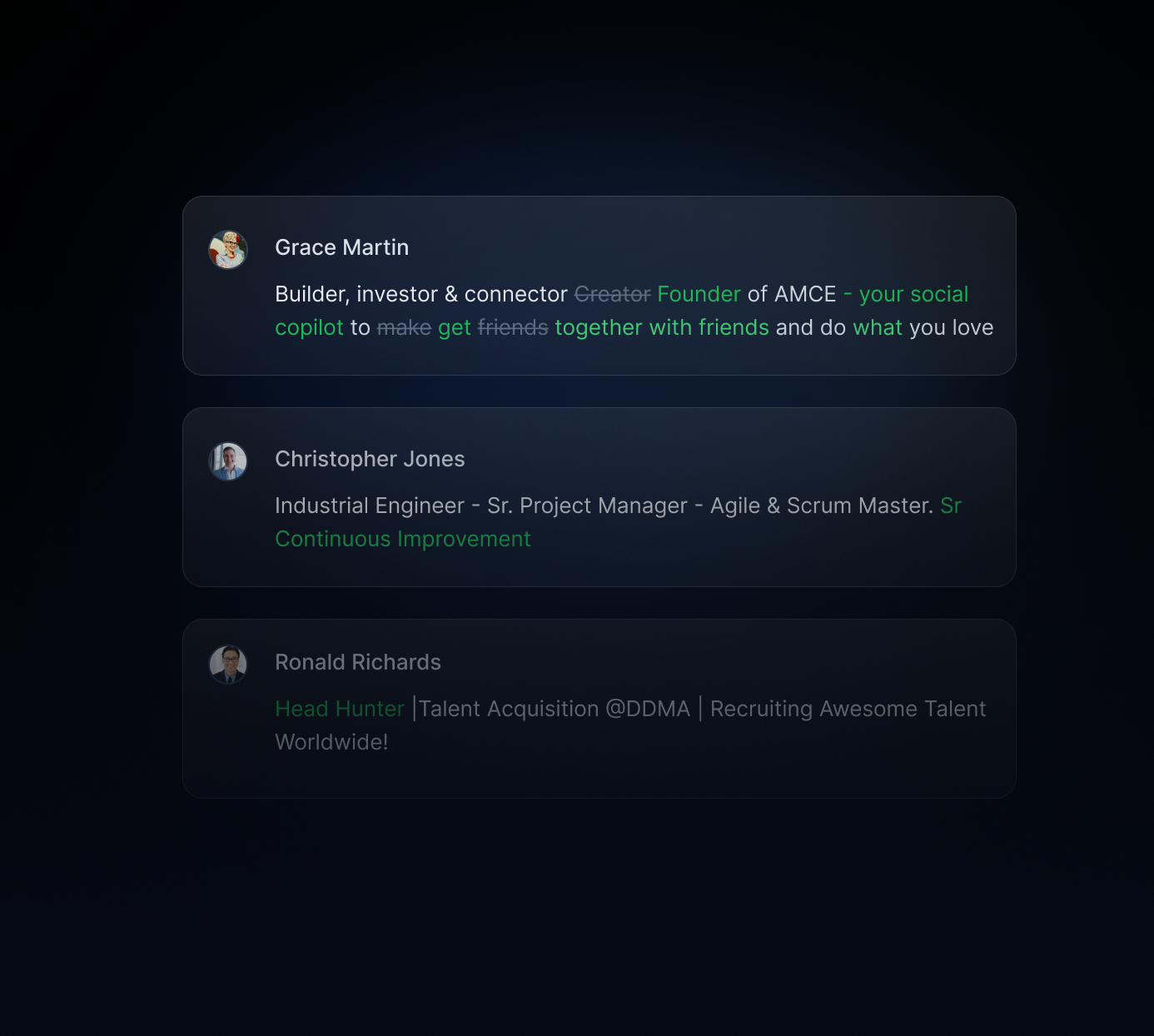
LinkedIn is a first-class citizen here: Rolodex relies on the browser extension for LinkedIn sync and continuously keeps your network current, including notifying you about new connections and title changes.
Relationship intelligence features that stay lightweight
Rolodex emphasizes features that make relationship management easier without forcing a heavy CRM workflow:
Shared notes to capture meeting context and keep teammates aligned, with the option to mark notes as private when needed.
A task manager to assign and track follow-ups tied to contacts, so relationship work doesn’t evaporate after meetings end.
Visual tools like boards, map view, and org charts to help you understand your network and navigate companies.
Keep-in-touch reminders that are designed for consistency, not spam
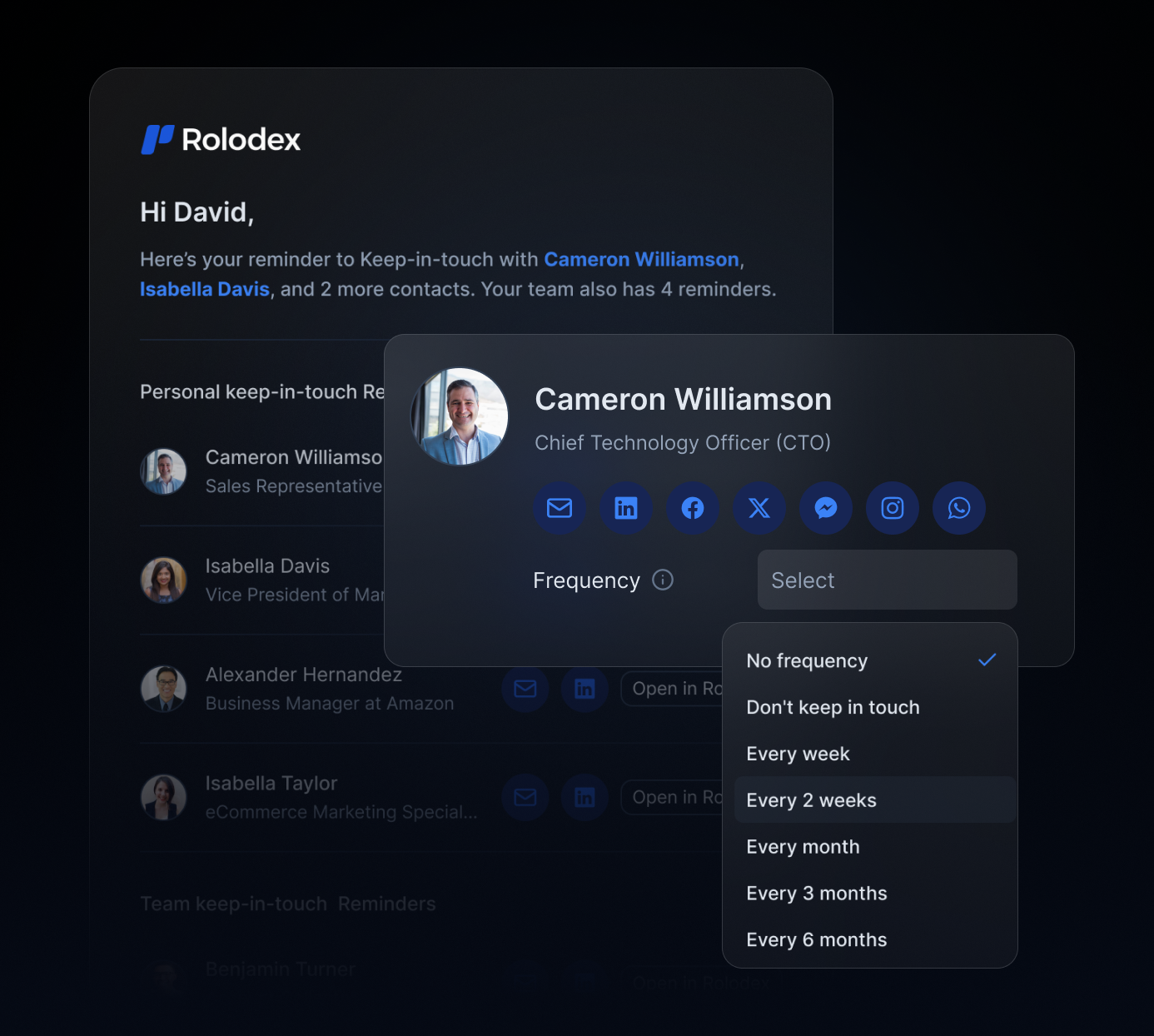
Rolodex’s keep-in-touch system is intentionally simple: set a frequency per contact (personal or team-wide), and Rolodex notifies you based on the last logged interaction. It also automatically spaces reminders so you don’t get flooded, and it supports both email reminders and mobile push notifications.
This ends up being a meaningful difference in day-to-day use: instead of relationship upkeep being an “optional dashboard,” it becomes a small weekly rhythm that the product actively supports.
Visualizing relationships as a practical advantage
Rolodex leans into “network as a map,” not just a list.
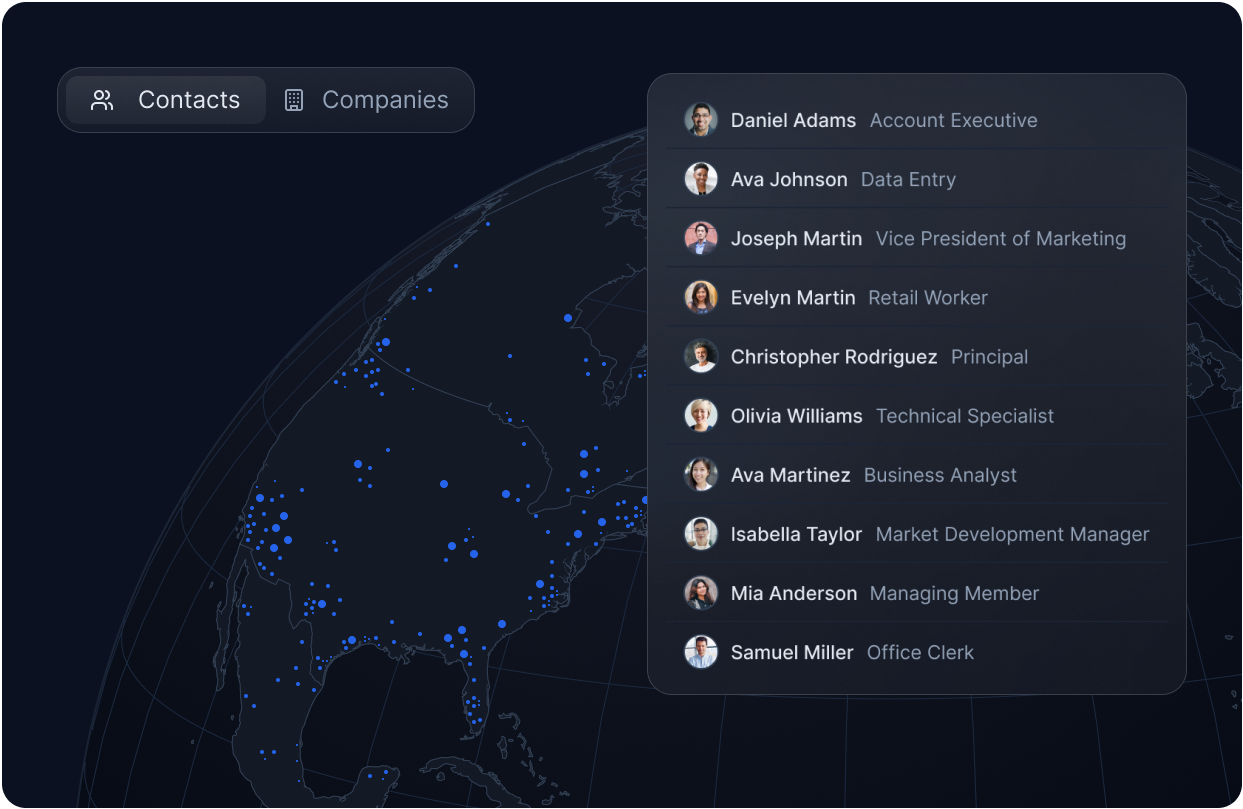
Map View helps you explore your network by location, which is surprisingly useful for travel, events, and market expansion.
Org charts are built for navigating complex companies: drag-and-drop reporting lines, identify champions, and understand where your team is already connected so you can multi-thread intelligently.
In Rolodex, these visuals aren’t just “nice-to-have views.” They’re part of how the product expects you to think about relationships: spatially, socially, and in context.
Where they overlap (and why the overlap can be misleading)
At a feature headline level, you’ll see familiar words in both products: notes, tasks, kanban/boards, email sync, and collaboration.
Attio supports notes and tasks as core productivity features.
Rolodex supports notes, tasks, and boards as relationship execution features.
Attio offers kanban views for pipeline progression with customizable stages.
Rolodex offers board views that turn contact lists into Kanban-style pipelines where you drag contacts between stages.
So why do they feel different?
Because the overlap is mostly in tools, not in intent.
Attio’s center of gravity is “model your business, then run processes.” Rolodex’s center of gravity is “centralize your team’s network, then stay warm and make introductions easier.”
Choosing between Rolodex and Attio
If you want the simplest litmus test, it’s this:
Choose Attio if your priority is building a customizable CRM engine
Attio tends to shine when you need a flexible data model with custom objects, list-specific attributes, multiple saved views, automations, integrations, and reporting dashboards that look and feel like an operating system for GTM processes.
It’s especially compelling for teams that want to formalize workflows and treat CRM structure as a competitive advantage.
Choose Rolodex if your priority is leveraging relationships without turning them into “pipeline objects”
Rolodex tends to shine when your biggest bottleneck is not “we need more CRM complexity,” but:
“We don’t have a shared view of who knows who.”
“Our relationship context lives in people’s heads.”
“We forget to follow up until it’s awkward.”
“We need warm introductions and better network visibility.”
Rolodex is built to consolidate your network, keep it current through LinkedIn sync and title-change visibility, give you team-wide interaction history, and make relationship upkeep a repeatable habit through keep-in-touch.
A practical way to think about the trade-off
Attio is great when you want to design a machine.
Rolodex is great when you want to strengthen a web.
Both matter. But most teams feel the pain in one of two places: either their process needs structure, or their relationships need continuity. If your team already has plenty of tooling for pipelines and forecasting, the “relationship layer” often ends up being the missing piece, and that’s where Rolodex is intentionally opinionated.
And if you’re starting from a relationship-first motion (fundraising, partnerships, recruiting, founder-led sales, consulting, community-driven growth), a relationship intelligence workspace can feel like stepping into a room that’s already arranged the way you think.
Feature | How it works in Rolodex | How Attio handles the same need | Practical takeaway |
LinkedIn sync + automatic profile updates | Connect LinkedIn via the Rolodex extension; contacts are kept up to date (titles, photos, etc.). You also get alerts when titles change. | Attio’s core “auto-population” story is driven by email + calendar sync, which creates People/Company records and enriches them from public sources. | If your relationship workflow lives on LinkedIn (and title changes are your trigger to reach out), Rolodex is more purpose-built. If you want enrichment primarily from comms history and data modeling, Attio fits. |
Title change notifications | Title changes appear and can trigger outreach moments; notifications are part of the LinkedIn sync experience. | Attio can support “events” via attributes + workflows, but the emphasis is more on automations/sequences for follow-ups and pipeline motions than LinkedIn-native job change alerts. | Rolodex makes “congrats on the new role” a default motion; Attio makes “automate next steps” the default motion. |
Keep-in-touch reminders | Set personal or team-wide frequencies; reminders are based on the last interaction and Rolodex spaces notifications so you don’t get flooded. | Attio typically covers ongoing follow-up via tasks and sequences (automated outreach and reminders). | Rolodex is “relationship hygiene” by design; Attio is “workflow follow-up” by design. |
Team network visibility (who knows who) | A shared workspace shows your team’s collective network, plus interaction counts/timestamps (without exposing private message content). | Attio supports team collaboration and shared context through synced email/calendar, record pages, notes, tasks, and email sharing controls. | Both can centralize a team’s context, but Rolodex frames it explicitly as a “team network map,” while Attio frames it as a collaborative CRM workspace. |
Interaction history (timeline of meetings/emails/notes) | Rolodex highlights full interaction history across the team (meetings, emails, notes). | Attio surfaces emails and meetings on record pages after sync, giving relationship insights and history. | Both cover this well. The difference is less “can it do it” and more “what do you do next”: Rolodex nudges keep-warm actions; Attio nudges process actions. |
Boards (Kanban) built from your contact lists | Board View turns lists into Kanban-style pipelines; move contacts through stages with drag-and-drop. | Attio supports Kanban views for objects/lists using a status attribute and stages you define. | Pretty even feature-wise. Rolodex tends to feel lighter for relationship pipelines; Attio tends to feel more “CRM-native” for structured processes. |
Org charts (company relationship mapping) | Build and collaborate on org charts inside company pages using drag-and-drop reporting lines. | Attio can represent relationships through its data model (objects/relationships/attributes), but org charts aren’t positioned as a core built-in visualization in the help docs the way they are in Rolodex. | If you do account planning around buying committees, Rolodex’s built-in org chart view is a strong differentiator. |
Map View (geographic view of network) | Visualize contacts pinned on a map by location for travel, events, and regional planning. | Attio supports views and filtering/sorting, but map-style visualization isn’t a core theme in the same way. | If “where is my network” is a real question you ask, Rolodex is the more direct answer. |
Notes (shared context) + private notes option | Notes can be shared across the workspace, and Rolodex supports private notes/fields for sensitive info. | Notes are collaborative in Attio and support mentions/templates; permissions and sharing controls exist at the workspace level. | Both support collaborative context. Rolodex explicitly calls out private notes/fields as part of team collaboration. |
Tasks tied to contacts/companies | Create tasks from a contact/company, assign to teammates, track in a task manager. | Tasks are a key Attio feature; accessible from the sidebar and designed for team to-dos and follow-ups. | Even. If you’re already living inside a CRM workflow, Attio tasks feel native; if tasks are “relationship to-dos,” Rolodex keeps them closer to the relationship layer. |
Email sending from inside the platform | Compose and send emails directly from a contact profile (when an email address is stored). | Send emails in Attio after connecting email accounts; manage default sending account and email settings. | Both do it. Decision comes down to whether you want email as part of relationship management (Rolodex) or part of CRM operations (Attio). |
Data organization: tags, custom fields, lists | Rolodex supports tags, custom fields, lists, and boards as the primary “organize your network” system. | Attio is deeply built around objects/attributes/lists and view configurations, including list-specific attributes and advanced filtering. | If you need maximum flexibility in how data is modeled, Attio usually wins. If you want a lighter system that still feels structured, Rolodex often feels faster to live in. |
API access | Rolodex provides a user API with API key authentication and endpoints for objects like tasks/lists/notes. | Attio offers an ecosystem of integrations (“apps”) and supports automation patterns; API capabilities exist but are not what we pulled from the cited pages here. | If your immediate need is “hook our relationship system into internal tooling,” Rolodex’s documented user API is straightforward. Attio shines when you want a broader integrations ecosystem. |
Importing / consolidating your network | Import from LinkedIn, email, phone, CSV, card scanner, Dex import; unify scattered contacts into one workspace. | Attio emphasizes populating People/Companies from synced email/calendar and enriching records, then organizing via lists/views. | Rolodex is more “bring your whole network in from everywhere.” Attio is more “your comms history becomes the dataset, then you model workflows on top.” |