Choosing between Rolodex and monday CRM is less about which product has “more,” and more about what you want your team to spend time doing.
monday CRM comes from a work management DNA. It’s built to let you model your sales process using boards, columns, views, automations, and a growing set of CRM features layered on top. That flexibility is the point: if your team wants to design a system that mirrors your exact internal process, monday CRM is a strong contender.
Rolodex takes a different approach. It’s built around relationship intelligence. Instead of asking your team to become administrators of a complex workspace, it focuses on making your shared network useful: keeping contact and company context current, surfacing interaction history, and helping people act on warm paths rather than cold lists. For smaller teams especially, that direction often translates into faster adoption and less overhead.
Where the difference shows up day-to-day
With monday CRM, you’ll often start by building the structure: pipelines, stages, rules, automations, dashboards, and potentially multiple boards for different motions. You can absolutely keep it light, but many teams end up expanding the workspace as the organization grows. Done well, it becomes a flexible operating system. Done less well, it becomes a place where half the team works and the other half avoids logging anything because it feels like work about work.
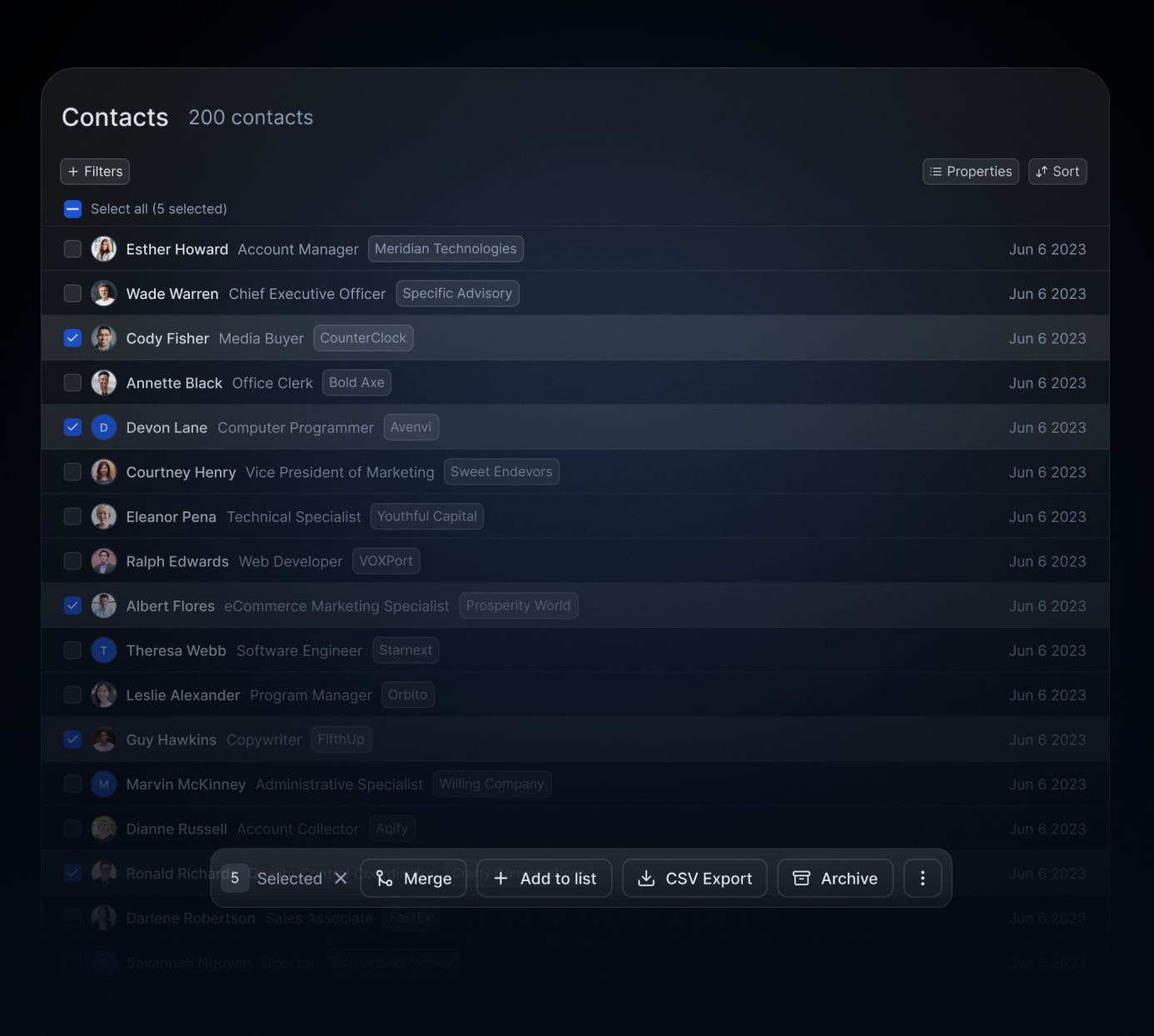
Rolodex tends to deliver value earlier, mainly because it’s designed to be used the way people actually maintain relationships. It’s less focused on the mechanics of “opportunity objects” and more focused on the context that makes outreach and follow-up effective: who knows who, what’s been said, what’s changed, and what the next nudge should be. You still get structure through Boards View when you need it, but the product doesn’t require you to build a world before you can operate in it.

Pricing: simplicity vs. tiers
Pricing is another place where the philosophies diverge. Rolodex is designed to be predictable: one simple plan, easy to budget for, and easy to roll out across a small team without someone constantly doing plan math.
monday CRM uses tiered pricing. That can look attractive at entry level, especially if you only need the basics, but the moment you rely on specific functionality (automation volume, advanced reporting, sales engagement features, or other higher-tier tools), cost and constraints can start to depend on which plan you’re on. In practice, monday’s model is great when you want a platform that can expand with you; Rolodex’s model is great when you want to keep decisions minimal and the system lightweight.
“Less features” can be an advantage
It’s tempting to read “fewer features” as a negative. For a smaller team, it’s often the opposite.
A feature-rich CRM can quietly demand governance: who owns the pipeline, who maintains fields, which boards are canonical, what “done” means, how to prevent duplicates, how to keep data quality stable, and how to ensure reporting isn’t misleading. None of that is bad. It’s just real work.
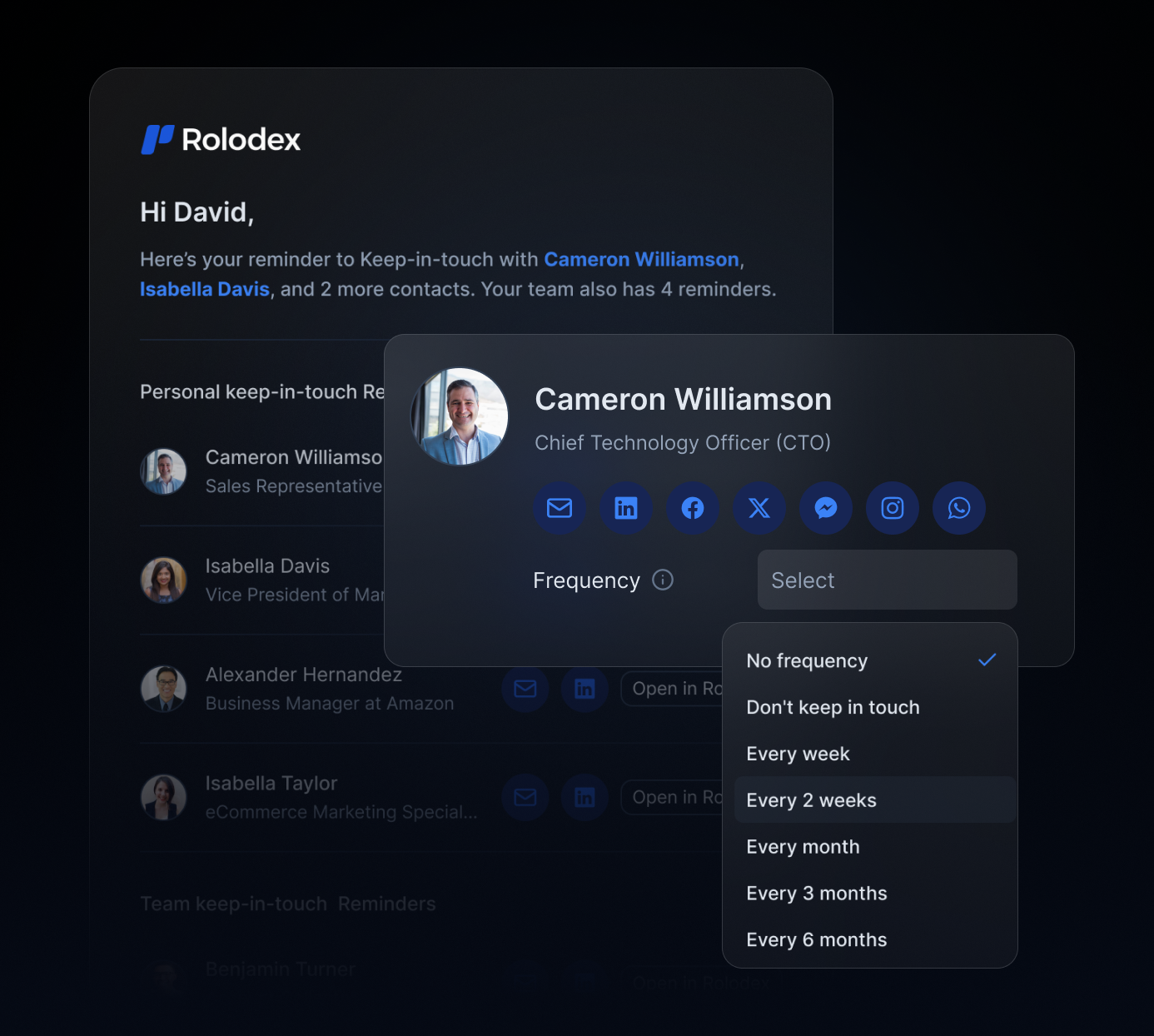
Rolodex deliberately reduces that burden by keeping the core experience centered on relationships rather than configuration. That means fewer places for data to fragment, fewer decisions required to keep things tidy, and a lower learning curve for teammates who just want to find context and take the next action.
Extensibility: keep the core simple, build the rest
A common concern when choosing a lighter tool is: “What if we need something bespoke later?”
This is where Rolodex’s API-first mindset matters. The product stays intentionally streamlined, but teams can use the API to build the last-mile workflows that are unique to them. Instead of living inside a sprawling configuration, you keep the daily workflow simple and extend only what you actually need: custom routing, reporting, enrichment, internal dashboards, or integrations into the rest of your stack.
monday CRM also has a strong API ecosystem and a platform approach that supports building apps and integrations. If your strategy is to centralize a lot of operational work into one configurable system, monday’s broader platform can be a genuine advantage. The difference is that with monday, extensibility often grows alongside more in-product configuration, while Rolodex tends to keep the product itself lean and lets teams “bolt on” what’s necessary through API-driven workflows.
A quick comparison (kept short on purpose)
If you care most about… | You’ll likely prefer… |
|---|---|
A lightweight, relationship-first tool with fast adoption | Rolodex |
Designing a highly customizable workflow system | monday CRM |
Predictable pricing and low admin overhead | Rolodex |
Extensive automation/configuration inside the product | monday CRM |
Keeping things simple and extending via API as needed | Rolodex |
Which one should you choose?
If your team wins through relationships, warm introductions, and staying on top of changes in your network, Rolodex is typically the more natural fit. It’s intuitive, cost-friendly for smaller teams, and intentionally avoids the “CRM sprawl” that can slow adoption. You still get structure through boards and workflows, but you’re not forced into a heavy setup process to get everyday value.
If your team wants to build a configurable sales workspace that can evolve into a broader operating system across functions, monday CRM is compelling. You get a flexible framework, strong automation capability, and the option to scale complexity as you scale the team.
The simplest way to decide is this: if you want your team spending time managing a system, pick the platform. If you want your team spending time acting on relationship context, pick the relationship intelligence tool.