Salesforce is one of the most powerful traditional CRMs ever built. It’s designed to help revenue teams manage customers and prospects through a structured sales process, with pipeline stages, forecasting, automation, reporting, and a huge ecosystem of add-ons and integrations.
Rolodex is different by design. We’re a relationship intelligence tool: built to help teams organize real networks, understand “who knows who,” and manage the relationships that don’t fit neatly into a “lead” or “customer” label, from partners and advisors to investors, industry peers, alumni networks, and champions inside target accounts. Rolodex pulls in relationship context from the tools where relationships actually live: LinkedIn plus your team’s email and calendars.
If Salesforce is the spreadsheet-of-record for revenue operations, Rolodex is the relationship layer your team uses to activate the network you already have.
What Salesforce does best (and why teams choose it)
Salesforce shines when you have a clearly defined sales motion and you want to operationalize it across a team:
Pipeline and forecasting first. Salesforce leans heavily into the concept of pipeline stages and structured deal progression, with forecasting as a core workflow.
Enterprise scalability and customization. It’s famous for being configurable, extensible, and deeply integrated through APIs and marketplaces.
AI for revenue workflows. Salesforce’s AI capabilities focus on improving sales execution: lead prioritization, forecasting support, and sales analytics.
And yes, Salesforce is “CRM” in the classic definition: a system for managing interactions with current and potential customers to improve profitability and growth.
That’s a great fit if your world is primarily transactional and you need the CRM to be the center of your go-to-market machine.
Where Salesforce can feel clunky for relationship-driven teams
Traditional CRMs tend to struggle in the messy middle where most real business relationships live:
1) Not every relationship is a “deal”
If you’re tracking relationships with advisors, future hires, community connectors, mentors, partners, investors, or “people we should stay close to,” forcing them into customer-centric objects and pipeline fields creates friction. It’s not that Salesforce can’t store those contacts. It’s that the underlying mental model is usually revenue-first.
2) Setup and admin overhead can become the project
Salesforce is powerful, but that power often comes with a learning curve and heavier implementation and change management compared to simpler tools. For relationship-driven teams, that can mean the system becomes something you maintain, not something you actually use.
3) Total cost tends to be more than the license line item
Salesforce’s entry pricing may start at $25/user/month for Starter Suite, but costs can scale significantly by edition and by add-ons, with professional services and support plans commonly increasing total spend.
Salesforce can absolutely be worth it, but teams should evaluate “all-in cost,” not just the first plan shown on a pricing page.
What Rolodex does differently: relationship intelligence in practice
Rolodex is built around the reality that your team’s most valuable “CRM data” already exists in other places: LinkedIn, inboxes, calendars, and the relationships in your heads.
Here’s what that means in a day-to-day workflow:
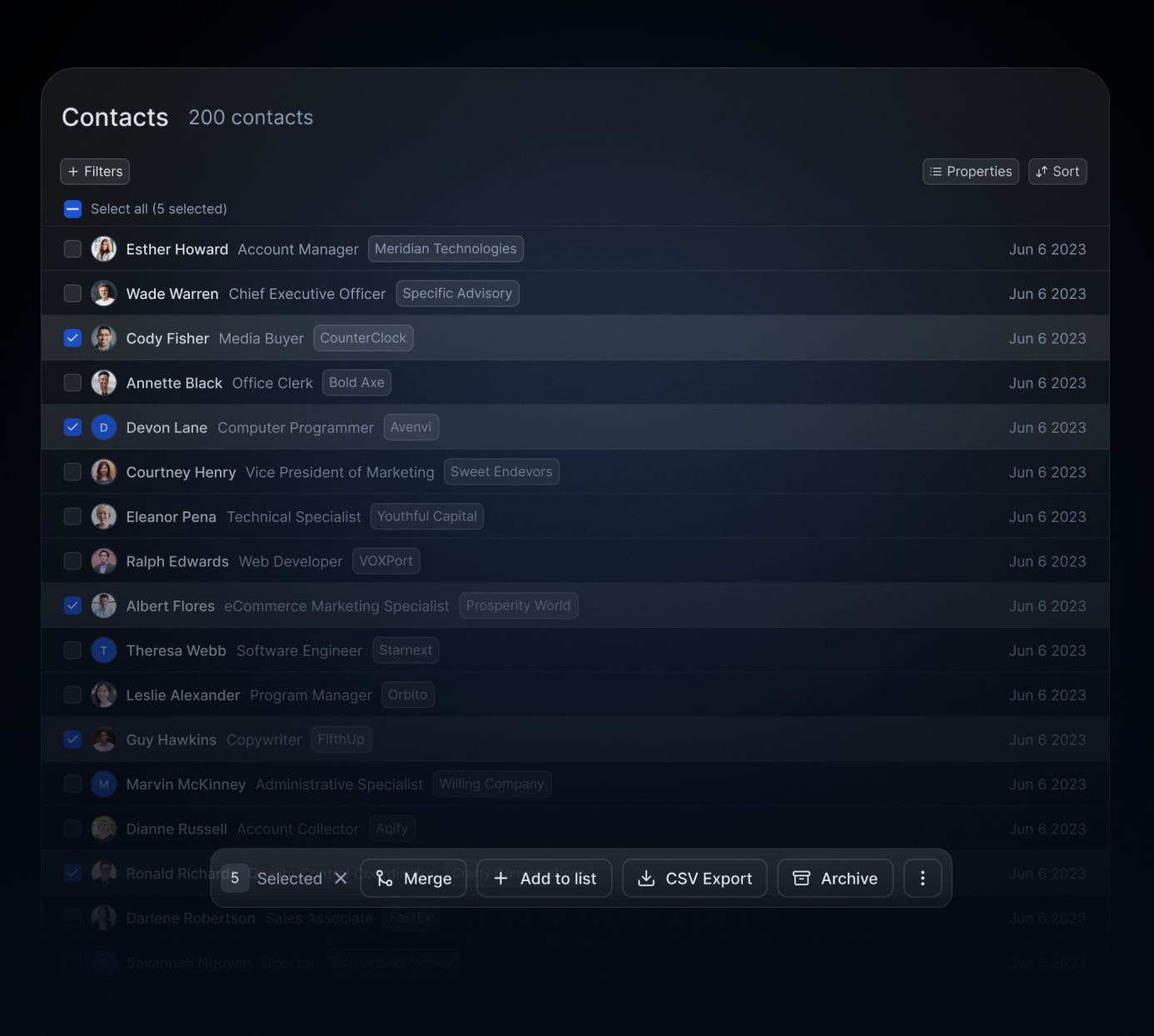
A unified network, not just a contact database
Rolodex overlays your team’s network into a shared system, so you can see relationship context and engagement history without making everyone become a data-entry machine.
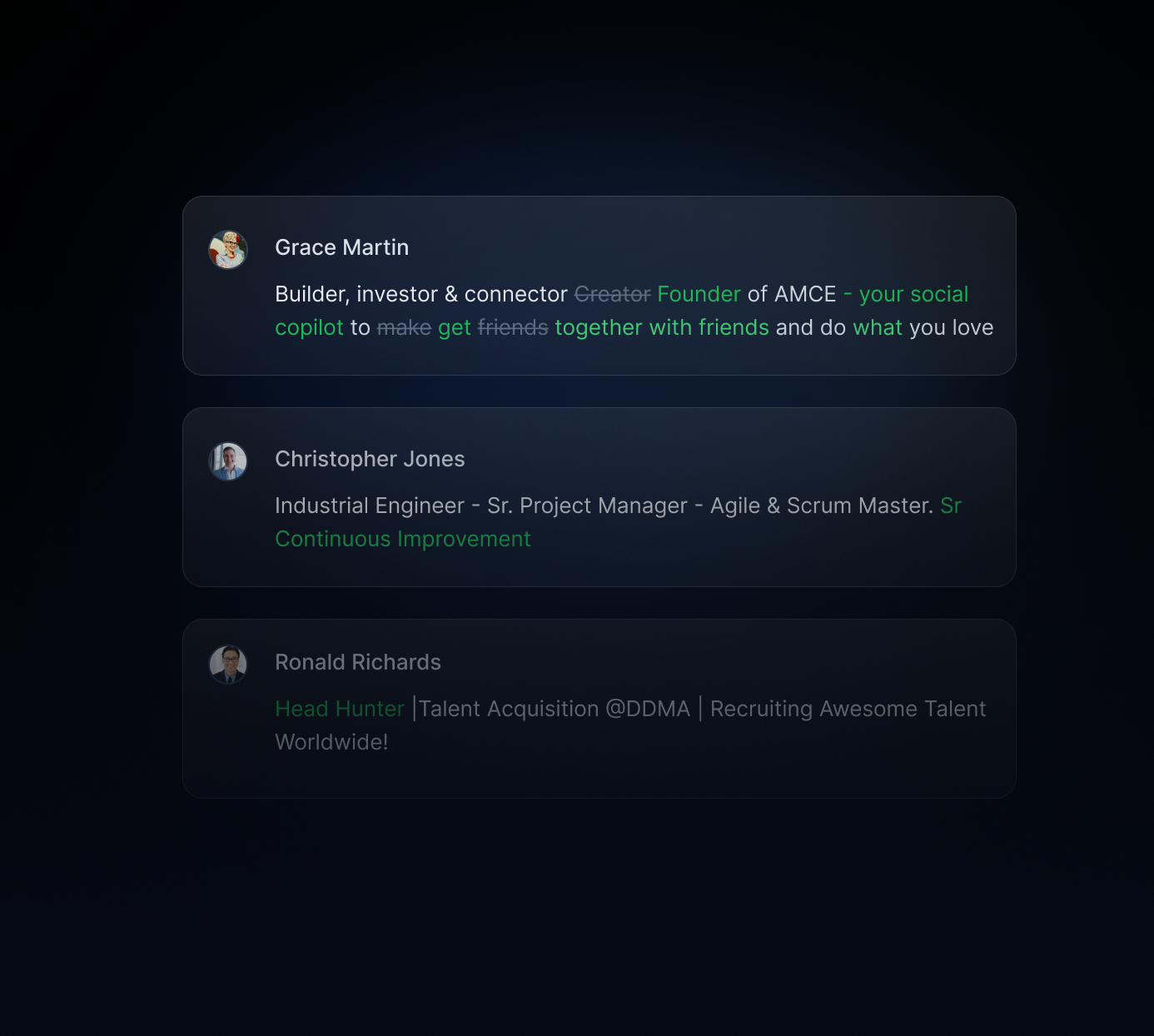
Native LinkedIn sync for living, changing careers
Most professional relationships move as people change roles, companies, and titles. Rolodex is built to sync LinkedIn data so your contact info and job changes don’t go stale the moment someone updates their profile.
Automatic context from email and calendars
Rolodex syncs with Gmail, Outlook, and calendars to capture interactions, meetings, and relationship history, giving teams shared context without extra work.

Flexible organization, without forcing everything into a sales pipeline
You can still run structured workflows when you want to. Rolodex includes board-style views that let you create lightweight pipelines (outreach, recruiting, investor conversations, partnerships) without the overhead of a traditional CRM buildout.
In other words: you can be organized without pretending every relationship is an opportunity record.

Pricing: a simpler model vs. enterprise scaling
Rolodex starts at $29 per user/month (billed annually). Salesforce’s entry pricing starts at $25 per user/month for Starter Suite, with higher tiers and add-ons increasing cost as needs grow.
On paper, those can look close at the starting line. In practice, the decision often comes down to what you’re buying:
With Salesforce, you’re buying a platform to run a full revenue operations machine.
With Rolodex, you’re buying a purpose-built relationship system designed to help teams activate their networks, stay on top of important connections, and collaborate around relationship context.
Which teams tend to choose which?
Choose Salesforce if you need…
A classic CRM command center: strict pipeline governance, forecasting, deep automation, and an extensible enterprise platform that can become the backbone of multiple GTM functions.
Choose Rolodex if you need…
A relationship intelligence layer that helps you manage the relationships that actually drive outcomes: introductions, partnerships, advisory circles, executive networks, recruiting pipelines, and the long-tail of “valuable people we should not lose touch with.”
If your team’s growth depends on people and networks (not just pipeline stages), Rolodex is built for that job.
The practical takeaway
If your business lives and dies by structured pipeline execution, Salesforce is hard to beat.
But if you’ve ever thought, “Our most important relationships don’t fit in our CRM,” that’s exactly the gap relationship intelligence tools exist to fill. Rolodex is built for non-transactional relationships, shared context, and turning a scattered network into a system your whole team can use.
If you want, paste your target audience (e.g., consulting, VC, partnerships, recruiting, founder-led sales) and I’ll tailor this article’s examples and section headers so it reads like it was written for that exact buyer.