If you search for “CRM,” you’ll find platforms built to run sales pipelines, automate follow-ups, and report on revenue. That’s exactly what Zoho CRM is designed to do. But many teams are not primarily trying to “run a CRM.” They’re trying to understand their network, stay current on key relationships, and turn warm connections into real outcomes.
That’s where Rolodex fits best.
Below is a practical comparison of Rolodex and Zoho CRM, with a focus on product philosophy, feature differences, and pricing.
What each product is built for
Zoho CRM: a traditional CRM for structured sales execution
Zoho CRM is a feature-rich CRM designed for sales teams that want pipeline management, automation, forecasting, reporting, and deep customization. It’s also part of a broader Zoho ecosystem, with extensive native integrations and add-on options.
Rolodex: relationship intelligence for teams
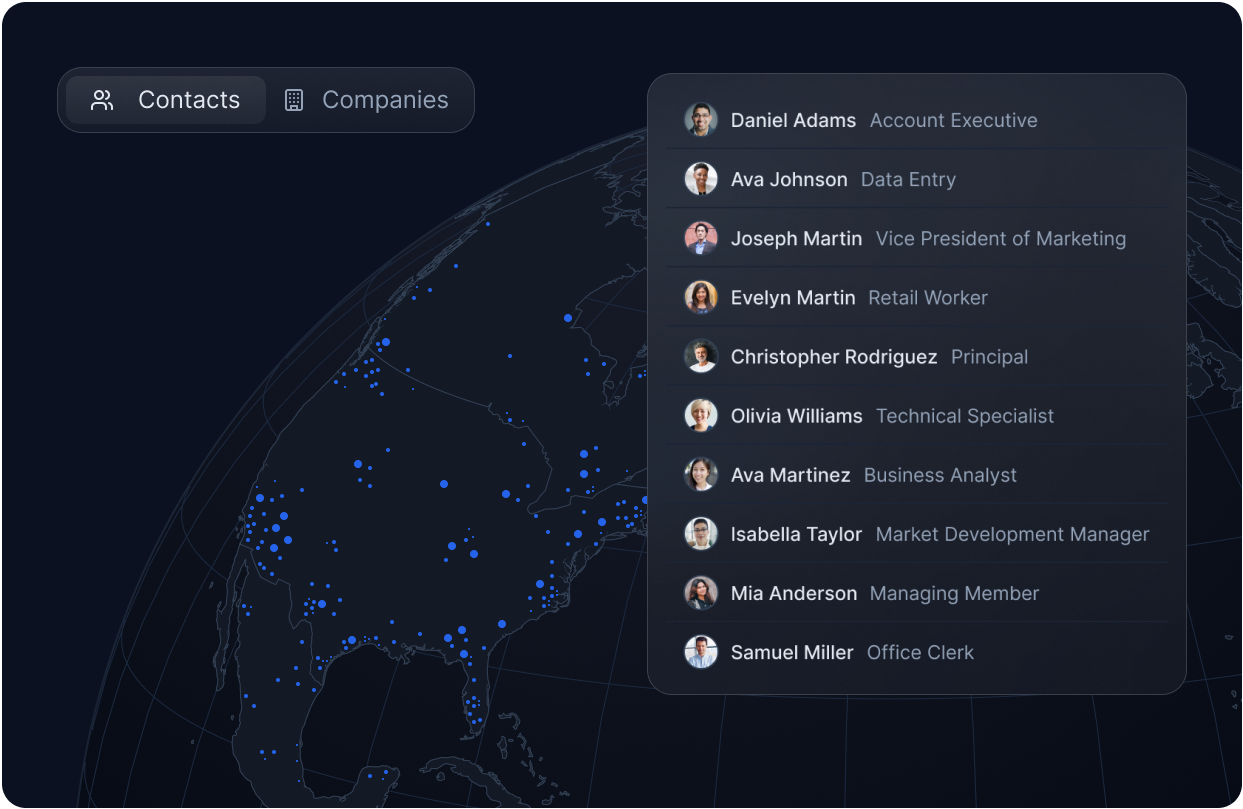
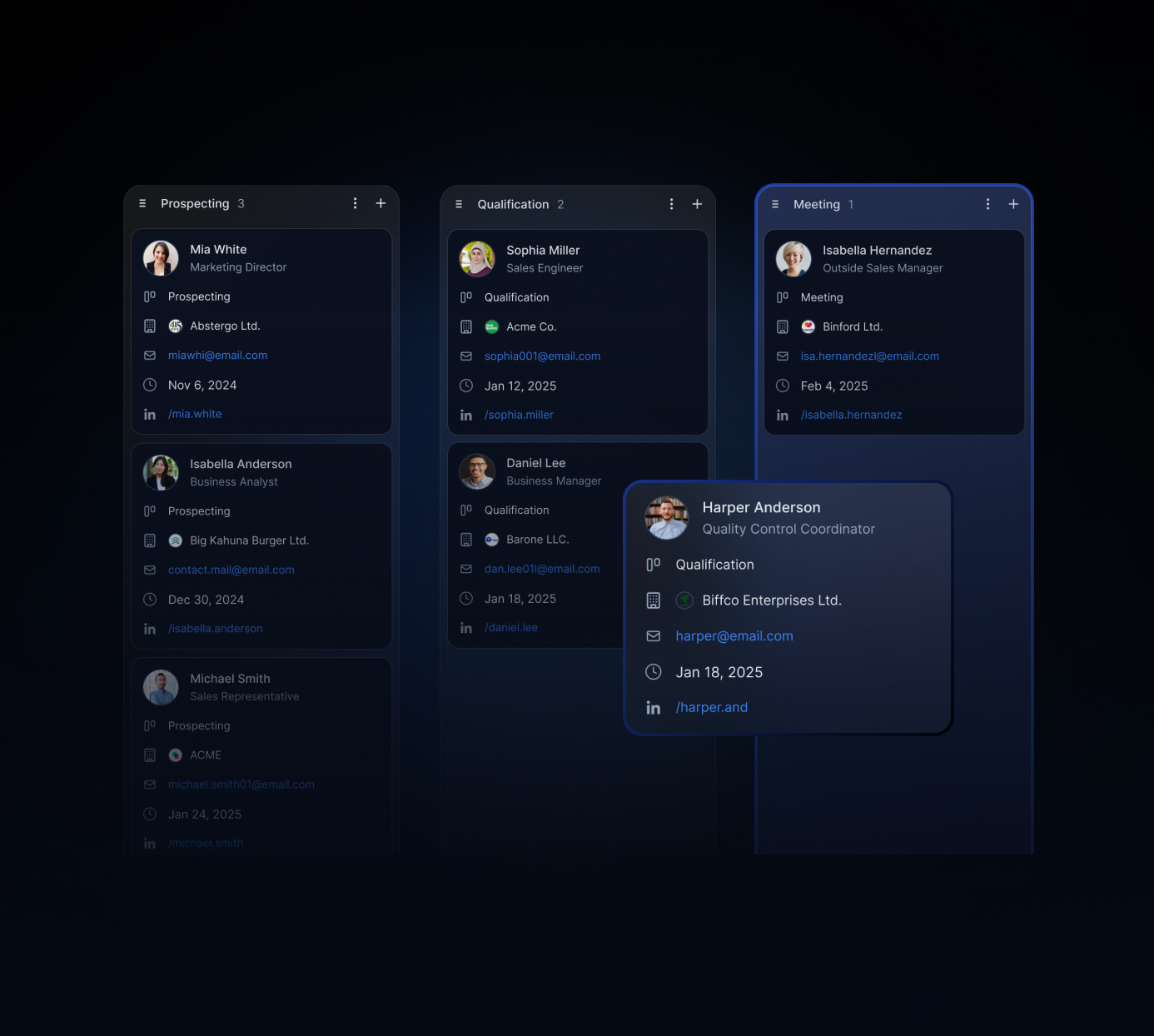
Rolodex is built around a simple idea: your team’s network is an asset. We help teams consolidate, organize, and act on relationships with tools like shared interaction history, LinkedIn syncing, Boards, Map View, and Org Charts.
If your primary goal is “manage a pipeline,” Zoho CRM is in its comfort zone. If your goal is “activate a network,” Rolodex is purpose-built for that job.
Feature differences that matter in practice
1) Data freshness and LinkedIn-driven updates
One of the hardest parts of relationship management is keeping contact data current, especially across a large network.
Rolodex continuously updates key LinkedIn fields (titles, photos, and more) and supports title change notifications so your team can act when timing is right.
Zoho CRM is highly capable as a database, but “freshness” typically depends on your workflows, integrations, and manual upkeep. (Zoho’s strength is breadth and customization rather than being natively LinkedIn-first.)
If staying current on roles and job moves is central to how you source opportunities, this is an area where Rolodex tends to feel lighter, faster, and more aligned with how modern relationship teams work.

2) Relationship visibility vs. pipeline reporting
Zoho CRM offers classic CRM tooling: lead/deal management, forecasting, dashboards, and automation.
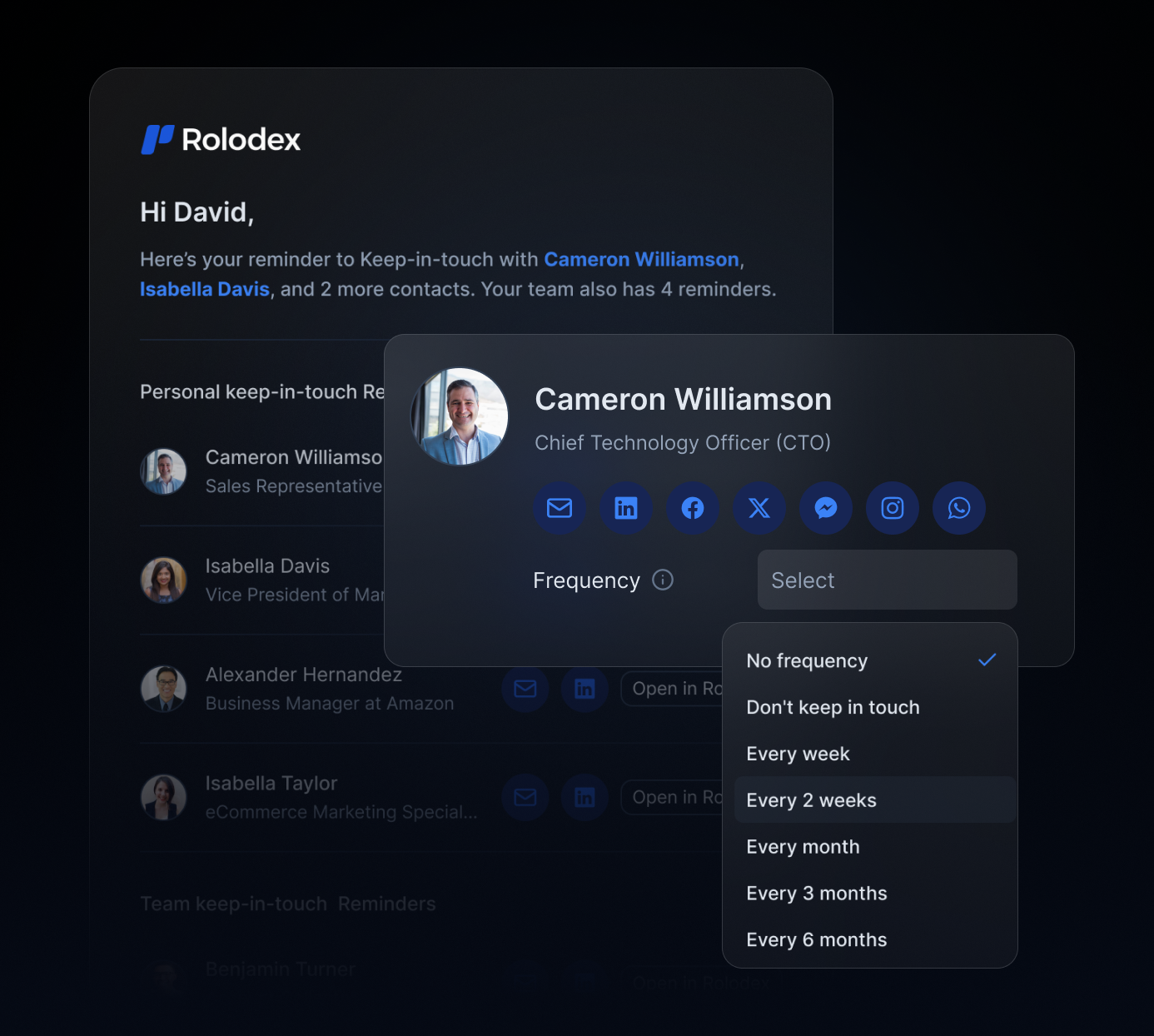
Rolodex focuses on relationship visibility: shared interaction history across your team and visual ways to organize and execute on relationships (Boards, Org Charts, Map View), plus keep-in-touch reminders.
A simple rule: Zoho tells you what’s happening in the funnel. Rolodex helps you understand who knows who, what’s changed, and what to do next.
3) Automation and AI
Zoho CRM has a well-known AI assistant, Zia, positioned to help with tasks like building modules, workflows, and generating insights.
That said, independent reviews commonly note that Zoho’s AI value is strongest in higher tiers, which can influence total cost as you scale.
Rolodex takes a more direct approach: instead of adding layers of complexity, we emphasize signal-based relationship workflows (like title changes) and execution tools that help teams follow through quickly.
4) Integrations and ecosystem
Zoho CRM’s biggest advantage is its ecosystem and flexibility:
It integrates deeply with Zoho’s broader suite and offers third-party integrations and APIs.
Rolodex is intentionally more focused:
We prioritize the integrations that matter for relationship intelligence, like account connections and LinkedIn-driven context, so you can consolidate and maintain a high-quality relationship workspace.
If your organization wants a single suite to cover sales, marketing, service, and ops, Zoho can be compelling. If your team wants a dedicated system for relationship execution, Rolodex stays simpler.
Pricing: predictable vs. tiered
Zoho CRM pricing
Zoho CRM offers a Free plan for up to 3 users, then paid tiers that scale in price with features.
A commonly referenced tier structure (billed annually) is:
Standard: $14/user/month
Professional: $23/user/month
Enterprise: $40/user/month
Ultimate: $52/user/month
This can be cost-effective early, but features (especially advanced AI and higher-end capabilities) often sit in the upper tiers.
Rolodex pricing
Rolodex is priced as a single, transparent plan at $29/user/month billed annually, with access to core relationship intelligence features included.
If you want predictable budgeting and full access without tier hopping, this is one of the reasons teams choose Rolodex.
Which teams should choose which?
Choose Zoho CRM if you need
A traditional CRM to run a pipeline end-to-end
Heavy customization (fields, modules, workflows, reporting)
A broad suite ecosystem for sales/marketing/support alignment
Choose Rolodex if you need
A shared system to manage and activate a team network
Automatic LinkedIn-based updates and title-change signals
Visual, relationship-centric workflows (Boards, Org Charts, Map View) and keep-in-touch execution

Our take
Zoho CRM is a strong CRM platform, especially for teams that want customization and a broad operational suite.
But if your team is using a CRM mainly because it’s the closest available tool, not because you actually want CRM complexity, it’s worth considering a relationship intelligence approach instead.
Rolodex is built for teams who believe relationships are not “just contact records.” They’re your advantage, and you should be able to see them, maintain them, and act on them without turning relationship management into a full-time admin job.