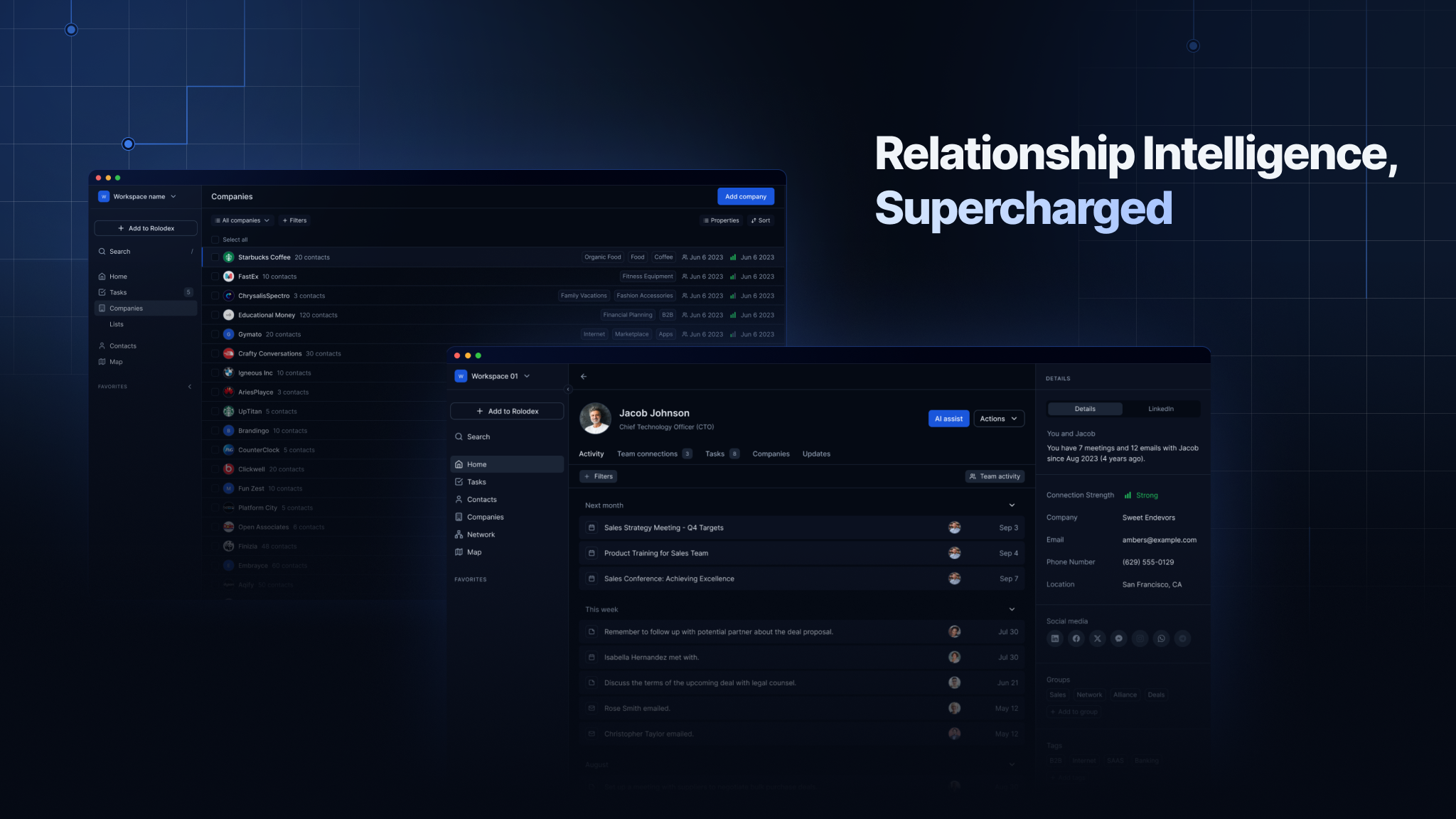
Why Rolodex Is the Network Intelligence Tool Your Team Needs
Your team knows more people than you realize. The problem is that knowledge lives in scattered places: someone's inbox, another person's calendar, a shared spreadsheet no one updates. When a teammate leaves or a key opportunity surfaces, figuring out who knows who and what's already been discussed becomes a scramble.
That's exactly what a network intelligence tool is built to solve. And it's why teams that need more than a contact list but less than a full sales CRM are turning to Rolodex.
What is network intelligence?
Network intelligence is the ability to see, organize, and act on the relationships your team has built over time. It goes beyond storing contacts. A good network intelligence tool shows you who on your team knows a particular person, the history of every interaction, and what follow-ups are still open, all in one place your whole team can access.
Most teams manage this poorly by default. Contacts live in individual inboxes. Meeting notes end up in someone's personal docs. When a teammate leaves, that relationship context walks out with them.
A relationship intelligence platform like Rolodex brings this information into a shared layer. Instead of relationship knowledge living in scattered tools and individual heads, it lives in a single view that the whole team can see and act on.
Who needs a network intelligence tool?
If your team's work depends on relationships rather than sales pipelines, you probably need something different from a traditional CRM.
The teams that get the most out of Rolodex include:
Business development teams that manage warm introductions, partnership conversations, and deals that move through trust, not stages
Founders and operators who want to see the full reach of their team's network without asking "does anyone know someone at X?"
Consultants and advisors whose most important asset is who they know and how well those relationships are maintained
Recruiting and talent teams that build relationships with candidates long before a role opens
Investors and portfolio teams tracking introductions, LP relationships, and deal flow across a team
What these use cases share: relationships are the work, not a means to a sale. A CRM built around pipelines and forecasts creates overhead that gets in the way. A network intelligence tool gets out of the way.
Rolodex vs. traditional CRMs: what is actually different
Tools like Salesforce, HubSpot, and Pipedrive are good at what they do. That thing just is not relationship intelligence.
Traditional CRMs are organized around the pipeline: leads move through stages, deals get scored, marketing automation runs in the background. If you are running a sales team, that structure makes sense. If you are trying to understand who on your team knows a particular founder, or stay on top of 50 key relationships across a growing organization, a pipeline gets in the way.
Rolodex works differently. There are no required stages, no mandatory pipeline, and no pressure to log activity in a way that supports a forecast. The focus is on shared visibility into your network: who you know, what has been discussed, and what needs to happen next.
For teams that have looked at enterprise relationship intelligence tools like Affinity and found the price hard to justify, Rolodex offers a lightweight CRM alternative at a fraction of the cost, without losing the network intelligence features that make these tools useful in the first place.
Key features of the Rolodex network intelligence platform
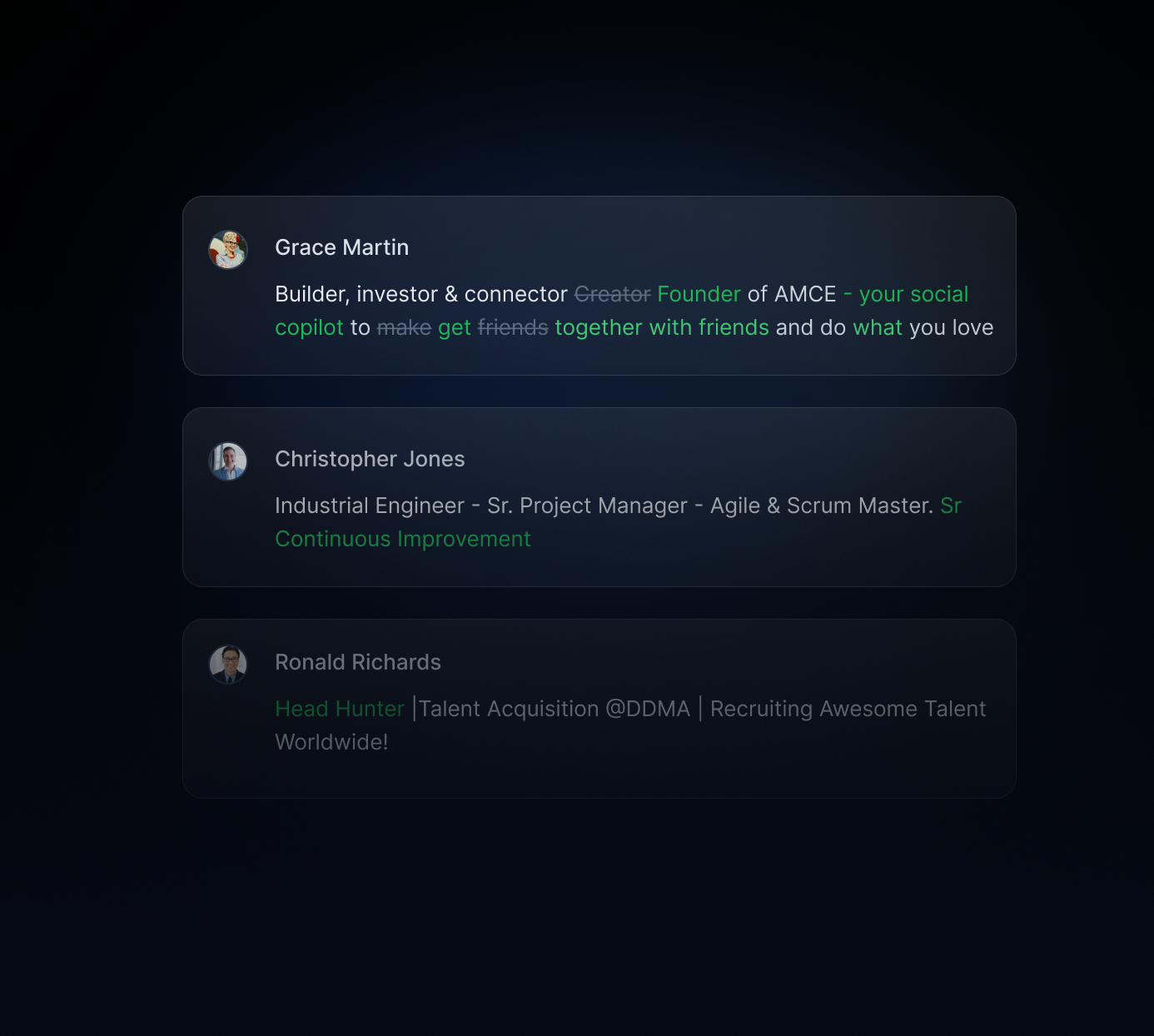
LinkedIn sync with real-time updates
Rolodex's browser extension lets you sync any LinkedIn profile in a single click. When a contact changes jobs or earns a new title, Rolodex updates automatically. You always have an accurate picture of your network without manual updates.
This matters more than it sounds. When you are preparing for a meeting or crafting a warm introduction, knowing that someone recently moved to a new firm changes the conversation. Sharing LinkedIn connections across a team means that visibility does not stay locked in one person's profile.
Shared interaction history
Every email and calendar event with a contact is stored in Rolodex and visible to the whole team. Before a meeting, you can see every touchpoint: who reached out, what was discussed, what was promised. No one has to ask "wait, did we already follow up on this?"
This shared interaction history is the core of what makes Rolodex a network intelligence tool rather than just a contact manager. Relationship context becomes team-level knowledge, not individual memory.

Custom fields and lists
Rolodex lets you build the organizational structure your team actually uses. Add custom fields to track relationship stage, investor tier, recruiting status, or anything else relevant to your work. Create lists for deal flow, priority relationships, or conference contacts. The structure follows your workflow, not a predefined CRM template.
Tasks and follow-ups
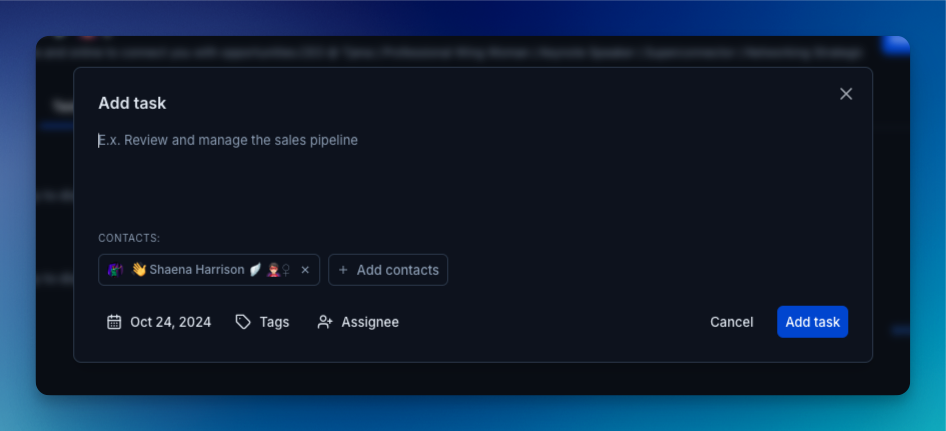
Assign follow-ups to teammates, set deadlines, and track progress on key relationships. Rolodex's task layer ensures nothing important slips through the cracks, especially useful for teams managing a large number of active relationships without a formal operations process.
How teams use Rolodex as a relationship intelligence platform
A few practical ways teams put Rolodex to work:
Pre-meeting briefing. Before a call, pull up the contact profile to see recent emails, past notes, and any tasks still open. Walk into every meeting with full context instead of scrambling through inboxes.
Warm introductions. Find out who on your team knows a target contact before you ask for an intro. The team's shared network becomes a searchable resource rather than a private Rolodex in someone's head.
Relationship handoffs. When a teammate leaves, their relationship context does not have to leave with them. All notes, history, and follow-ups are shared and accessible, so nothing has to be rebuilt from scratch. Here is how relationship offboarding works in practice.
Staying on top of key contacts. Use Keep in Touch reminders to make sure important relationships do not go cold. Set a cadence for reconnecting with key contacts, and Rolodex surfaces who is overdue for outreach.
For teams evaluating their options, the relationship intelligence 101 guide covers the broader category and how tools in this space differ. And if you are comparing specific tools, the best CRM alternatives for 2026 covers the wider competitive landscape.
Frequently asked questions
What is the difference between a CRM and a network intelligence tool?
A CRM is built around a sales pipeline: leads, deals, stages, and forecasts. A network intelligence tool is built around relationships: who you know, how well you know them, and what follow-ups are open. CRMs assume you are closing deals. Network intelligence tools assume you are building relationships that may or may not involve a transaction.
Is Rolodex a CRM?
Rolodex is better described as a relationship intelligence platform. It shares some surface similarities with CRMs, like contact records and interaction tracking, but it is not built around a sales pipeline. There are no required stages, no deal scoring, and no marketing automation. It is designed for teams that manage relationships as the core of their work, not as a side function of a sales process.
How does Rolodex compare to Affinity?
Affinity is a relationship intelligence platform built primarily for venture capital firms and institutional investors. It is powerful, but priced for enterprise budgets. Rolodex offers comparable network intelligence features for teams that do not need an enterprise-tier tool. See the full comparison: Rolodex vs. Affinity.
Who is Rolodex best suited for?
Rolodex works best for small-to-mid-size teams where relationships drive outcomes but a formal sales process is not the primary workflow. Business development, fundraising, recruiting, consulting, and partnerships are the most common use cases.
Elevate your team's network with Rolodex
Most teams have a broader network than they realize. They just do not have a good way to see it, share it, or act on it together.
Rolodex is the network intelligence tool built for exactly that: teams that value relationships over pipelines, with the shared visibility, interaction history, and collaboration features to make your collective network genuinely useful.
Ready to see what your team's network actually looks like? Try Rolodex today and turn your connections into a strategic asset.