
How to Build a Talent Pipeline Through Warm Introductions
The best candidates for most open roles are not on job boards. They are employed, not actively looking, and reachable through one or two warm introductions from someone on your team. The problem is not access; it is visibility. Most teams do not have a clear picture of who their collective network can reach, so every search starts cold when it does not have to.
A recruiting approach built on relationship intelligence changes that. Instead of sourcing from scratch, you work from a map of who you already know, who knows them, and when the timing is right to reach out. This guide covers how to build a talent pipeline from your team's existing network, from surfacing passive candidates to keeping warm relationships active over time.
Why the best passive candidates are already in your team's network
Passive candidates are people who are employed, not actively seeking, and not responding to cold outreach. They make up the majority of the talent market. They do not engage with job board applications. They do ignore cold LinkedIn messages. But they do respond to a warm introduction from someone they know and respect, especially when the timing is right.
The catch is that warm paths to the best candidates are invisible without a shared system. A hiring manager knows some candidates. A partner knows others. An advisor went to school with exactly the person you are looking for. That collective reach is your most valuable recruiting asset, and it lives scattered across individual inboxes, LinkedIn connections, and personal contact lists.
Relationship intelligence is the framework for turning that scattered network into something usable. In a recruiting context, it means knowing who on your team can open a door to a passive candidate before you ever send a cold message.
How to surface and track passive candidates using a shared network
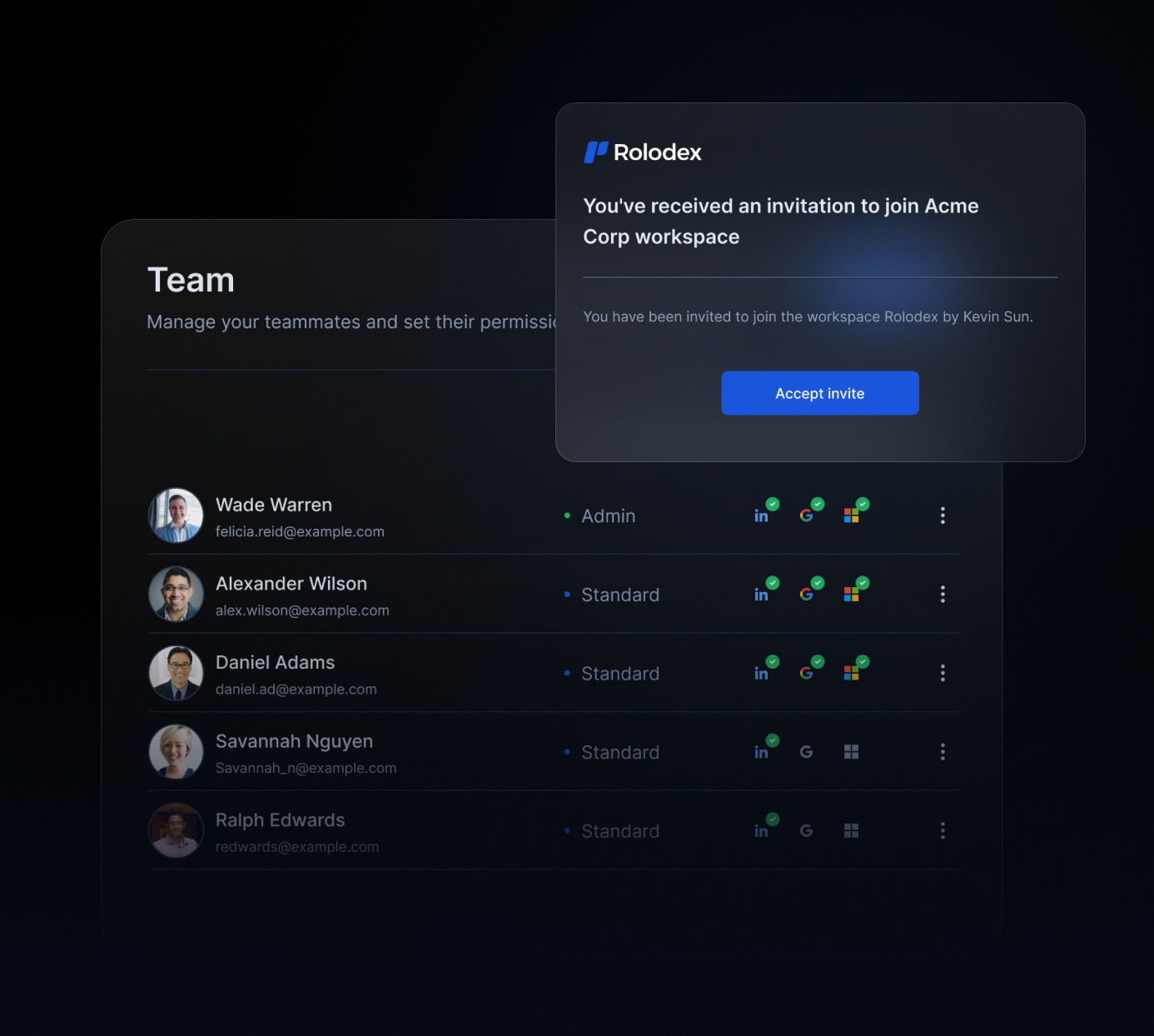
Rolodex consolidates your whole team's network into one shared workspace. Once email and LinkedIn are connected, you can search across everyone's contacts, filtered by title, seniority, company, industry, or any custom field your team uses.
For candidate sourcing, that means instead of guessing who might be a fit for an open Head of Product role, you run a filter: title contains "Product," seniority is Director or above, industry is SaaS. What comes back is a short list of real people your team already has a warm path to, not strangers in a database.
From there, you build a talent pipeline by creating a dedicated Rolodex List: "Future Product Leaders," "Design Alumni Network," or "Engineering Pipeline, Fintech." Each list becomes a living roster of passive candidates your team has a relationship with. You can see the warmest introduction path to each person, add notes from past conversations, and attach context, a resume, a prior interview debrief, a reference from a mutual contact.
This is what makes relationship-based recruiting different from traditional candidate tracking: the pipeline is built on existing trust, not cold outreach. A message that comes through someone the candidate already knows has a response rate that cold sourcing cannot match.
For teams with structured hiring workflows, the warm introduction request process applies directly. The same double opt-in mechanics that work in sales and business development work in recruiting, and they protect the introducer's relationship with the candidate.
How to use job change signals to time recruiting outreach
Timing is what separates a warm message that lands from a warm message that gets ignored. The right candidate at the wrong moment, three months into a new role, deep in a high-stakes project, just passed a milestone, will not move. The same candidate when they just left a company, just got passed over for a promotion, or just wrapped a major chapter has a completely different openness.
Rolodex Title Alerts notify your team when someone in the shared network updates their job title or company on LinkedIn. Both signals are recruiting-relevant:
A promotion means they are visible, recognized, and likely being recruited by others. A "Congrats on the VP role" follow-up from someone they already know is a low-effort way to stay top of mind before they are actively considering a move.
A company departure is the clearest timing signal in recruiting. Someone who just left a role is in a window, often just a few weeks, where they are deciding what comes next. A warm introduction at this moment, from someone they know, lands in exactly the right inbox at exactly the right time.
Tracking these signals across your team's network is the operational difference between relationship-based recruiting that converts and passive lists that quietly go cold.
How to keep a talent pipeline warm without cold outreach
Most talent pipelines fail not because the candidates were wrong but because the relationship went cold. A recruiter adds someone to a list, sets no reminder, and reconnects six months later with a role pitch that feels like it came out of nowhere. The candidate has mentally moved on.
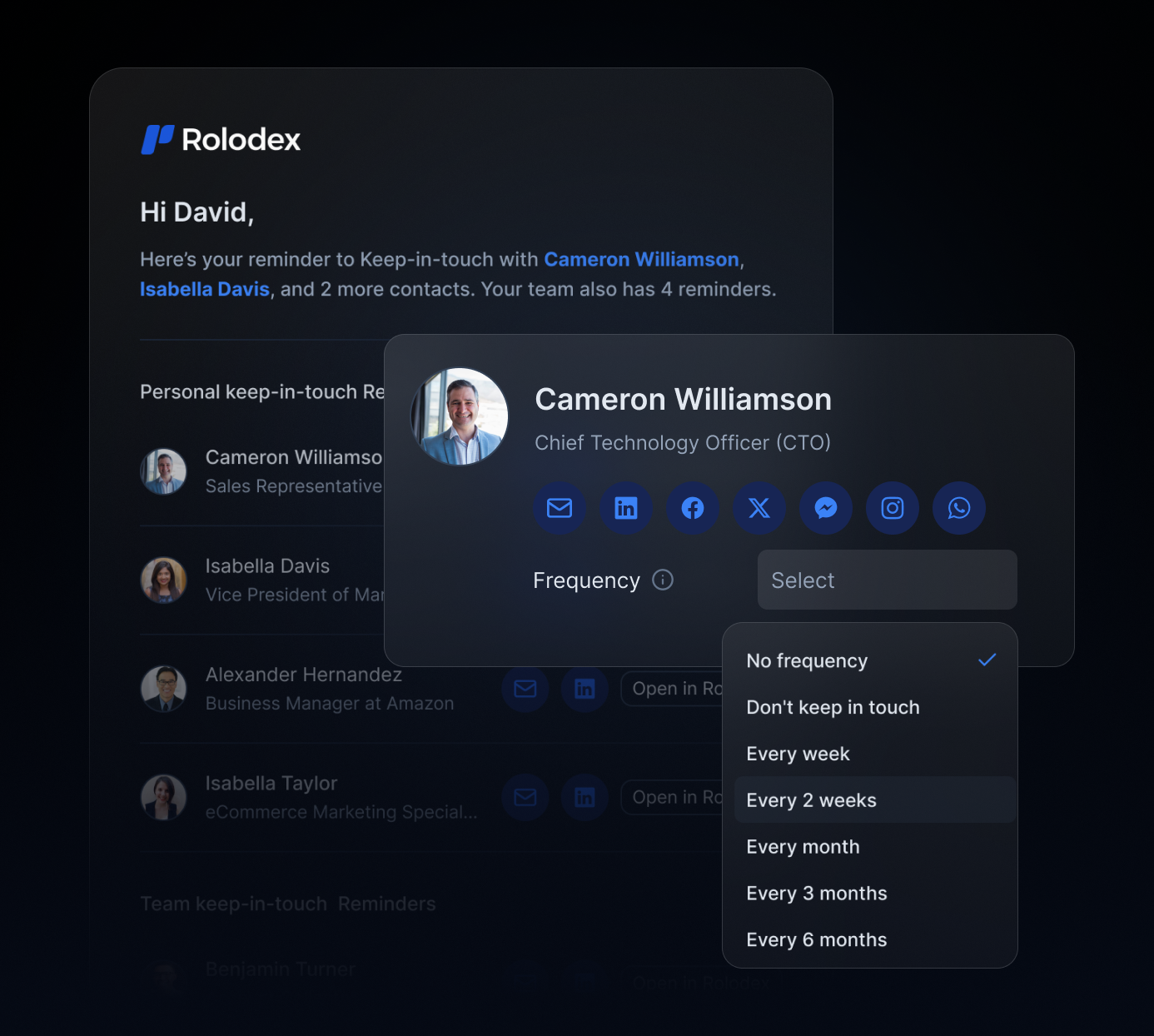
Keeping a recruiting pipeline warm is a cadence problem. Rolodex's Keep in Touch reminders let you set a check-in frequency for each candidate, quarterly for strong fits, biannual for longer-horizon targets, and the system prompts you before the relationship lapses.
The check-in itself does not need to be about a role. A short note referencing something they published, a role change at a mutual contact, or a relevant industry conversation takes 90 seconds and keeps the relationship alive for another quarter. When the right role opens, you are not starting a conversation, you are continuing one.
After every substantive interaction, add a brief contact note: what you discussed, where they are in their career thinking, what would make a move interesting to them. That context, visible to any teammate who opens the profile, means the candidate feels known rather than tracked. It also means a new recruiter can pick up a relationship that a colleague built rather than starting from scratch.
For teams building this into a consistent cadence, a weekly relationship management ritual covers how to maintain 50 or more key relationships without the work piling up.
A 90-day talent pipeline playbook for relationship-driven teams
Most recruiting systems take months before they deliver value. This one delivers in the first week because it starts from relationships your team already has.
Days 1–30: Build visibility. Connect email and LinkedIn, invite teammates to the shared workspace, and let Rolodex consolidate the network. By day 30, run your first candidate sourcing filter for the role you are most actively hiring for. Create a List with the results. You now have a talent pipeline of warm candidates your team already knows, built in under an hour.
Days 31–60: Activate the network. For each candidate on your list, identify the warmest introduction path. Who knows them best? Who worked with them recently? Use Rolodex's shared network visibility to find the right person to make an introduction request, and use the warm introduction template to make the ask easy for the introducer to act on. Set Keep in Touch reminders on every candidate who is not ready to move now. Add a note from each conversation so future follow-ups have context rather than starting cold.
Days 61–90: Strengthen the pipeline. Title Alerts are now firing for candidates in your network. When someone moves, you have the context to send a message that feels personal rather than automated. Track engagement in Rolodex, who responded, who is warming up, who is in early-stage conversation. By day 90, you have a talent pipeline your whole team can see and contribute to, built on real relationships rather than cold sourcing. Roles fill faster because the groundwork was already there.
Build your recruiting pipeline from the network you already have
The fastest path to the best passive candidates runs through the people who already know them. Relationship-based recruiting outperforms cold outreach because trust travels with the introduction, and because a candidate who was approached through a warm connection starts the conversation with a better impression of your team than anyone who received a cold LinkedIn message ever does.
Rolodex gives recruiting teams and hiring managers a shared workspace where passive candidate lists, contact notes, warm introduction tracking, and Keep in Touch reminders all live together. The talent pipeline grows more useful over time because every conversation adds context, every Title Alert adds timing, and every warm introduction adds a relationship that might not convert this quarter but will the next.
Sign up for Rolodex and have your team's talent pipeline running this week.