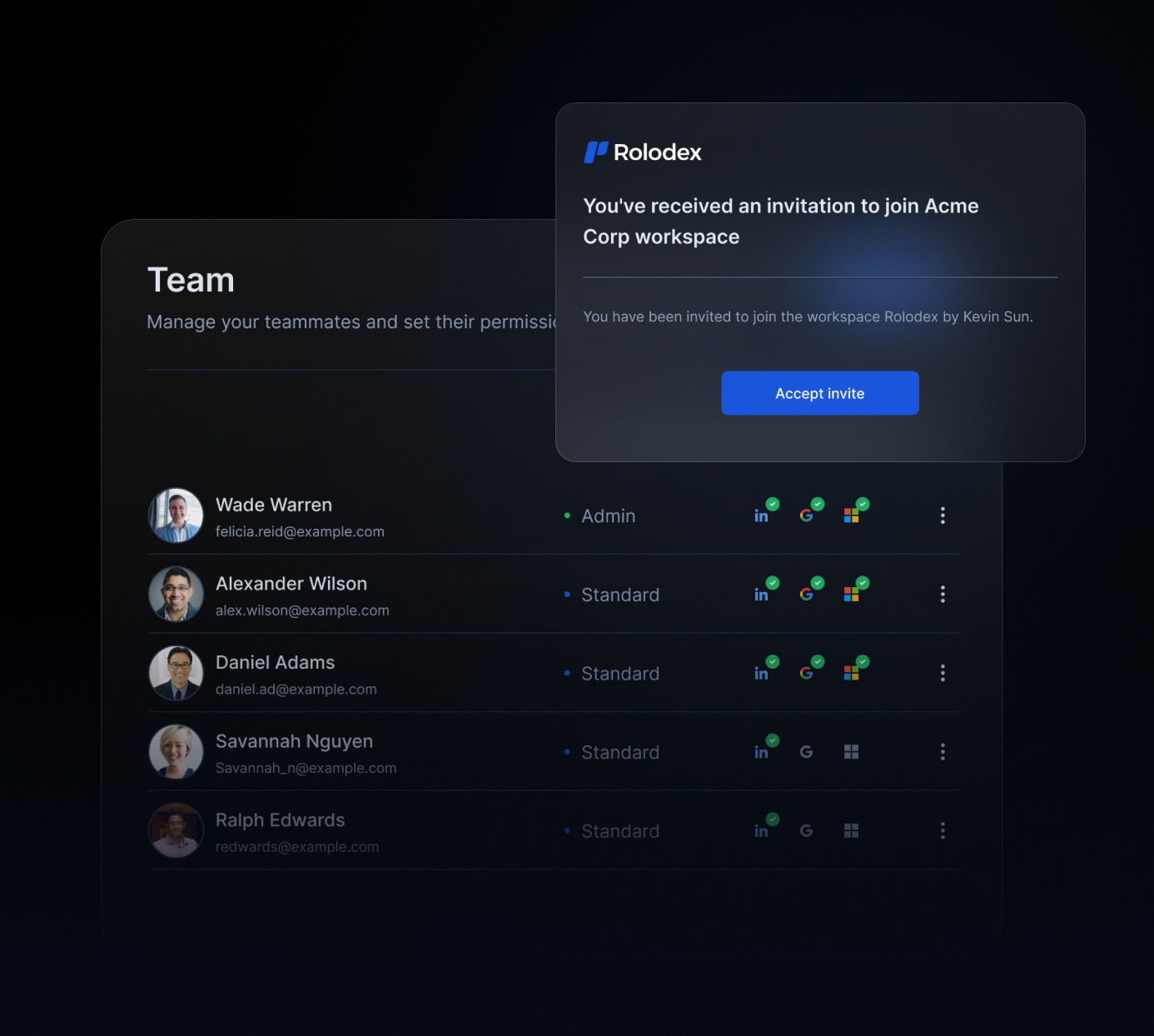
How to Visualize Your Team's Network with Rolodex
Most teams are sitting on more relationship capital than they realize. The problem is that it lives in five different places: individual inboxes, personal LinkedIn connections, scattered spreadsheets, a CRM that only sales uses, and someone's memory. When a team member leaves, that context disappears with them. When a new deal is being pursued, no one knows that a colleague already has a strong connection at the target company.
Visualizing your team's network changes this. When every relationship your team has is visible in one shared workspace, the dynamic shifts: outreach gets coordinated, warm introduction paths surface naturally, and the team acts on collective knowledge instead of individual memory.
This is what Rolodex is built to do. As a relationship intelligence platform, Rolodex gives teams a shared view of their full network, not just active customers, but the broader web of relationships your team has built over years.
Why teams need network visualization
Most CRMs are built to track deals, not relationships. They capture prospects and pipeline stages, but miss the broader professional network your team has accumulated: former clients, investors, mentors, advisors, journalists, event contacts, and everyone else who does not fit neatly into an active sales opportunity.
That gap has a real cost. Sales reps reach out cold to contacts their colleagues know well. Recruiters miss candidates already in the company's network. Founders spend weeks pursuing introductions that a team member could have made in a day. The relationship context existed, it just was not visible to anyone but the person who held it.
Team network visualization brings that context into a shared workspace. Every contact, every interaction, and every relationship connection becomes something the whole team can see and act on. Instead of asking "does anyone know someone at that company?" and waiting for replies, you look it up directly.
This is the core case for team relationship management software that goes beyond pipeline tracking: it makes the entire network an organizational asset, not a collection of personal contact lists.
What relationship intelligence looks like in practice
Rolodex is a relationship intelligence platform, which means it is built around relationships rather than transactions. The distinction matters when you are thinking about team network visualization.
A traditional CRM shows you who is in your pipeline. Rolodex shows you who your team knows, across every type of relationship, at every stage. Former clients appear alongside current prospects. Investors sit next to advisors. A contact you met at a conference two years ago is as discoverable as a customer you closed last month.
The platform connects to Gmail, Outlook, LinkedIn, and calendars and consolidates everything into a single shared workspace. When a teammate already has a relationship with a contact, that shows up. When a conversation happened eight months ago and someone left notes, those notes are there. No one has to send a Slack message asking "did we ever talk to them?" because the answer is visible to everyone on the team.
This is what team relationship management looks like when it is working: full context, shared across the team, without anyone having to maintain a separate spreadsheet or remember to update a database.
Four ways to visualize your network in Rolodex
Rolodex gives teams several ways to navigate their collective network, depending on what question they are trying to answer.
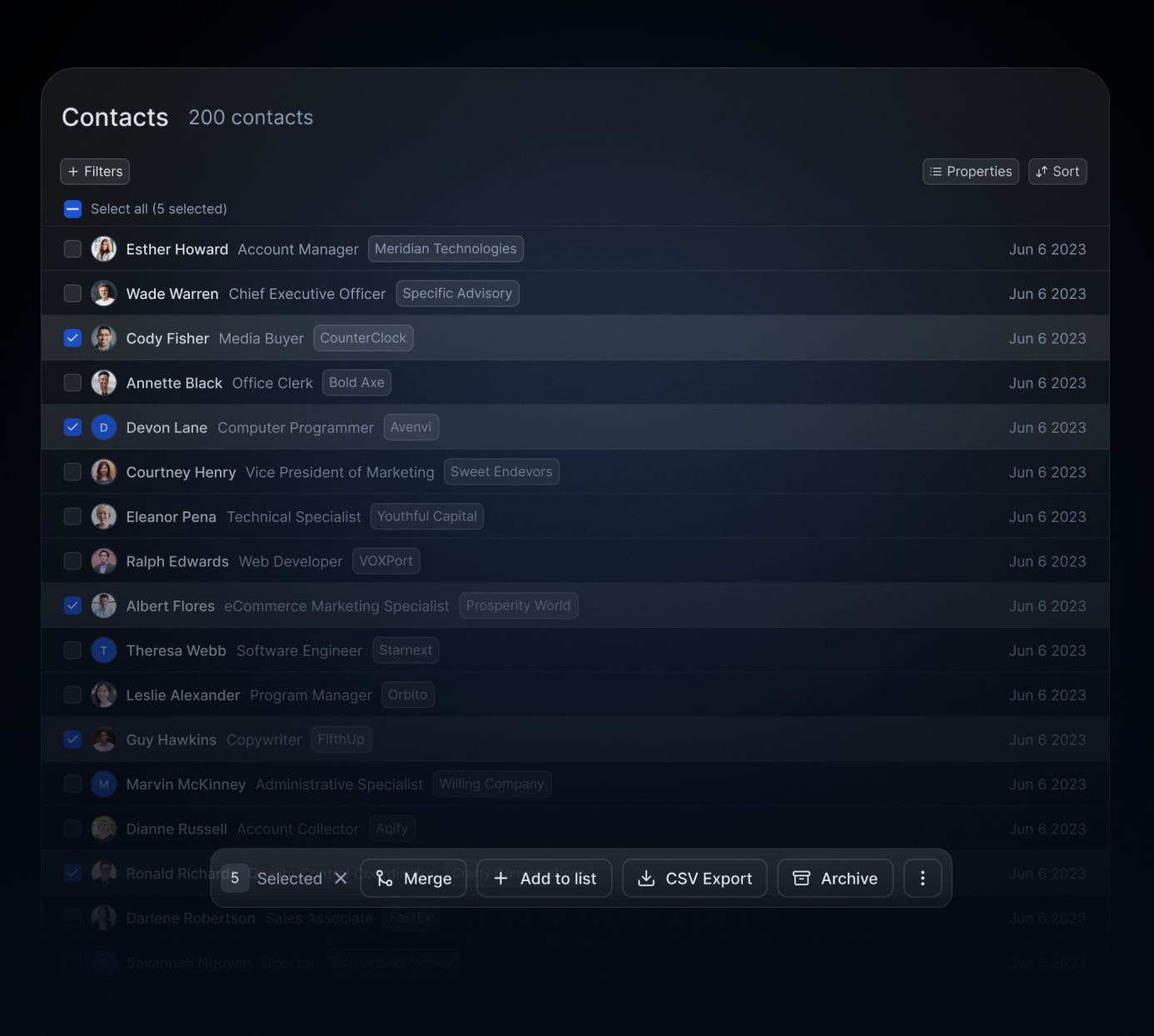
Lists and filters
The most direct view. Search your entire team's contact pool by company, location, tag, or relationship type. If you need every contact at a specific company, or every investor your team has spoken with in the past 18 months, lists and filters surface them in seconds.
This is also where duplicated outreach gets caught before it causes problems. If two team members are both planning to reach out to the same contact, it shows up. The team can coordinate instead of sending two separate, uncoordinated messages to the same person, something that happens more often than most teams would like to admit.
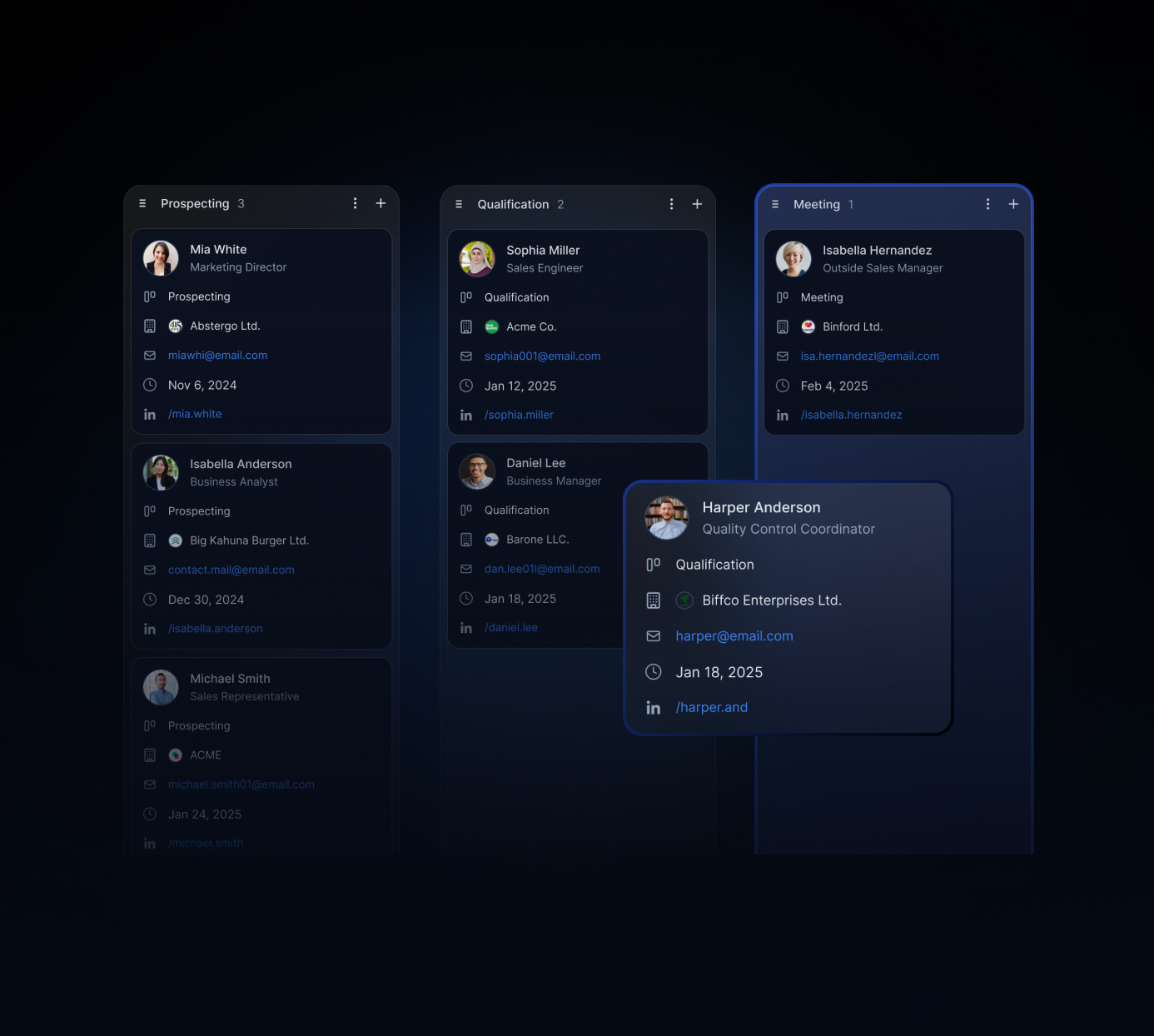
Board View
Board View uses a Kanban layout to organize contacts by relationship stage or campaign. Teams running multi-stage outreach, managing investor relationships, or tracking contacts at key accounts can see where each relationship stands and what needs attention next.
It is particularly useful for teams coordinating outreach across multiple stakeholders at the same target organization. You can see the full picture of your touchpoints without chasing down updates from individual team members.
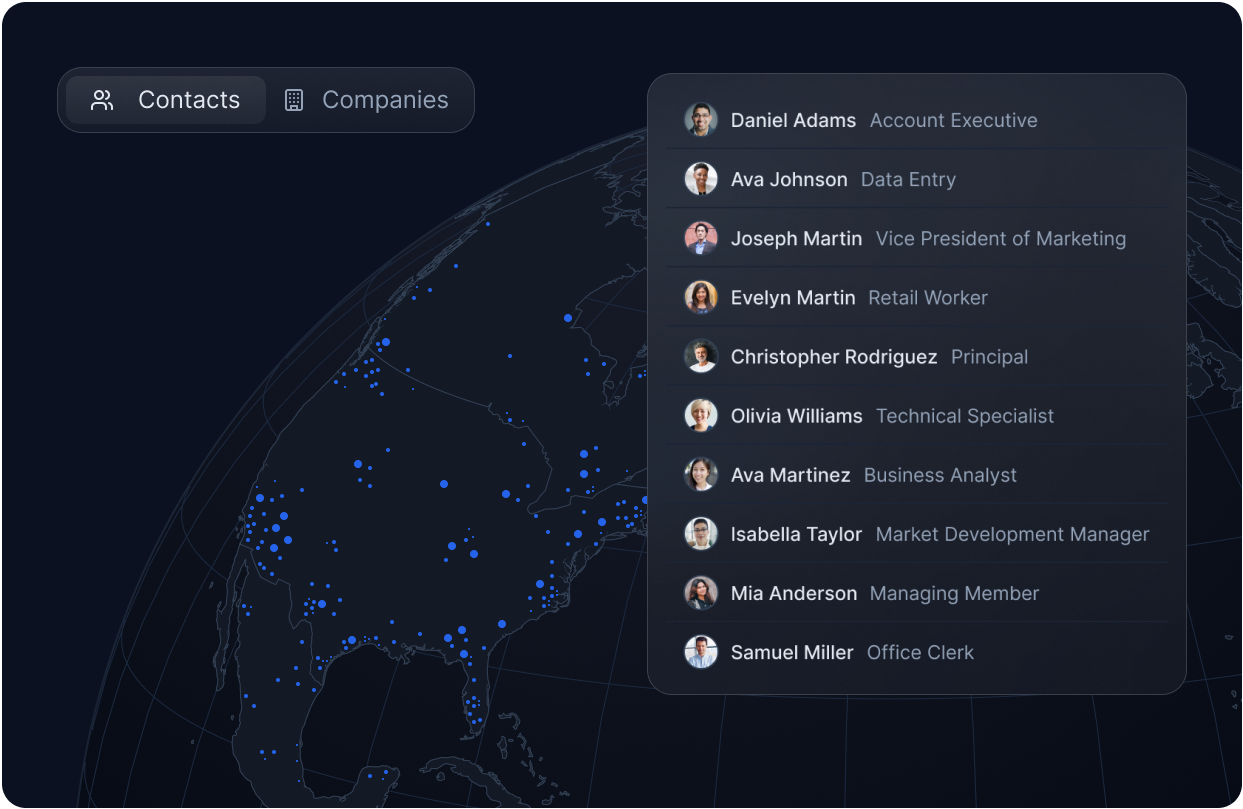
Map View
Map View plots your team's contacts geographically. For field sales teams, regional managers, or anyone who thinks about relationships in terms of territory, Map View shows which contacts are clustered where.
This makes it practical to plan in-person visits, find connections when entering a new market, or understand where the team's relationship density is highest and lowest. A geographic view of your network is the kind of insight that is invisible when contacts are spread across individual inboxes.
Org charts
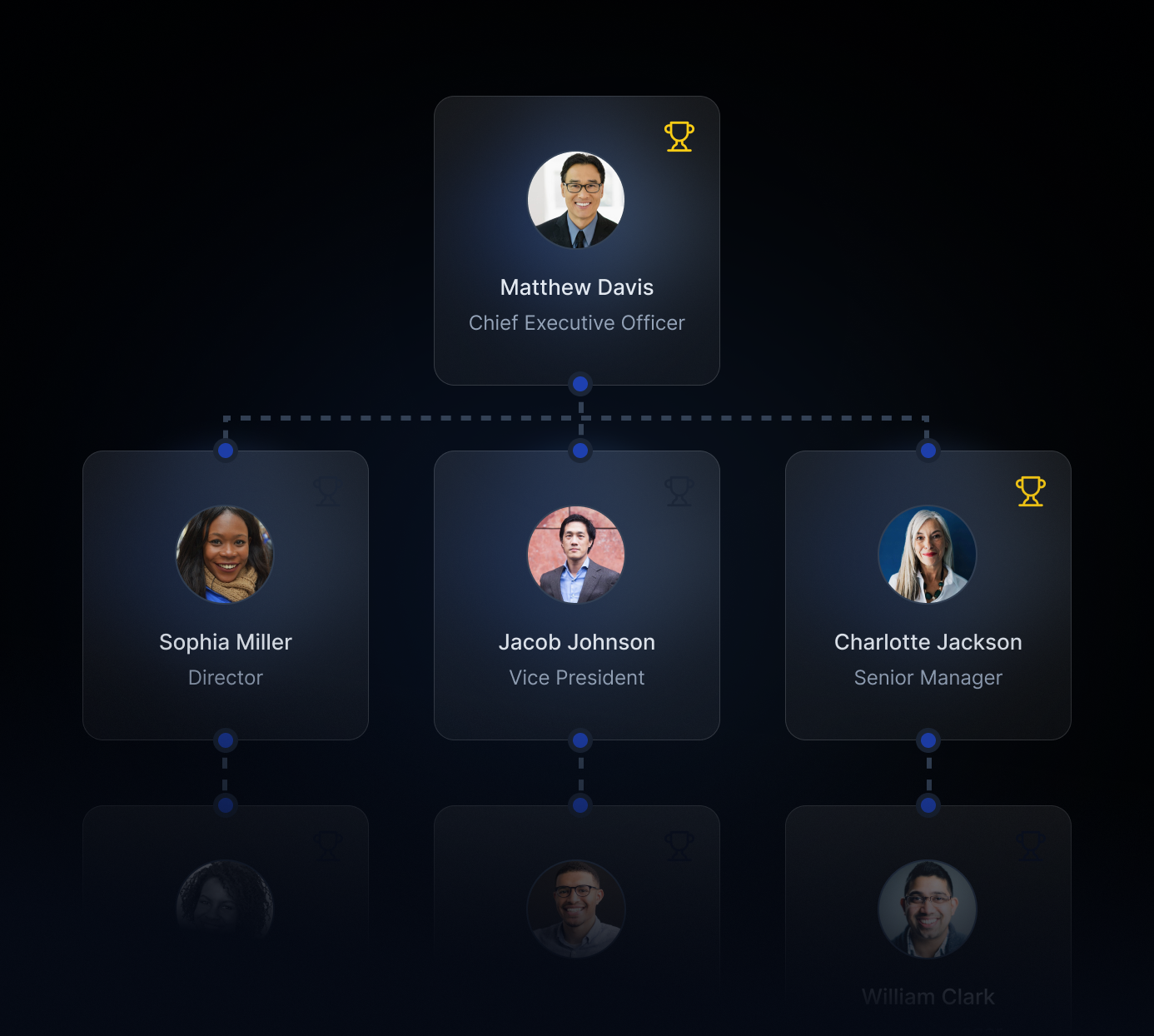
Org charts show how contacts relate to each other within a company or account. When your team is working a large deal or building a relationship with a major organization, org charts let you understand the decision-making structure and see who else at the company is worth engaging.
This is the foundation of multi-threaded outreach: instead of relying on a single contact at a target account, your team can see the full organizational picture and coordinate across multiple relationships at once. Single points of contact are a risk; org charts help you build a broader base.
How warm introductions surface through shared network visibility
Warm introductions are the highest-converting form of outreach. A message introduced by someone the recipient already trusts gets a response rate that cold outreach rarely approaches. Most teams know this intuitively, but most teams have no structured way to surface introduction opportunities across their full network.
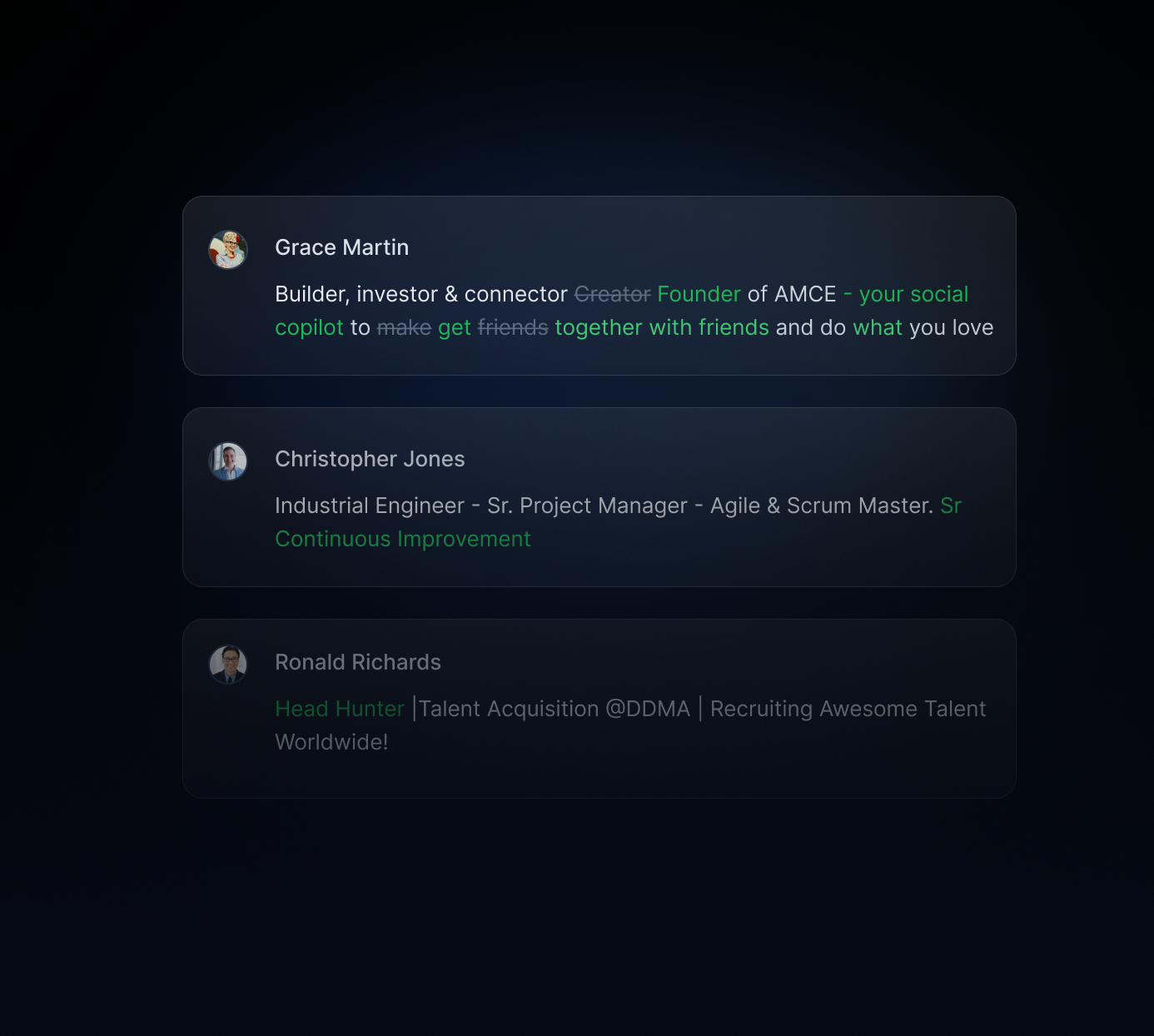
Rolodex makes warm introductions visible. When your team is pursuing a contact, you can see whether anyone on the team already has a connection there. If a colleague knows the target personally, or there is a shared contact two degrees away, that path appears in the shared workspace.
The difference is significant. A relationship that would otherwise require weeks of cold outreach can be unlocked with a simple internal ask: "Can you make an introduction?" When those paths are visible, teams use them. When they are buried in individual inboxes, they go unused.
This is one of the most practical advantages of team network visualization: it turns introduction paths from a lucky discovery into something the team can systematically find and act on.
Rolodex as a CRM alternative for relationship-driven teams
Rolodex is not a traditional CRM. It does not have pipeline stages, deal values, or revenue forecasting. That is intentional. Traditional CRMs are built for sales processes, and they do that job well. But many teams manage relationships that do not fit neatly into a pipeline: investor relations, recruiting, partnerships, advisory relationships, business development.
For those teams, a traditional CRM creates overhead without providing the context they actually need. Rolodex is the CRM alternative for teams whose work centers on relationships rather than transactions.
The setup is lightweight. There is no months-long implementation, no dedicated admin, and no complex configuration required. Connect your email and calendar, invite your team, and your collective network starts to take shape in one place. Most teams have a clear picture of their shared network within the first week.
Where a spreadsheet falls apart, because no one keeps it updated, and a traditional CRM feels too heavy, Rolodex sits in the space between: enough structure to be useful, not so much that maintaining it becomes a second job.
Building a relationship-centric team culture
The teams that get the most out of Rolodex treat relationship visibility as a shared responsibility, not a personal one. When everyone adds notes after conversations, updates relationship context when something changes, and checks the shared network before reaching out cold, the whole team benefits.
Over time, this changes how the team operates. People stop working from individual contact lists and start working from a shared understanding of who the team knows and how those relationships are connected. Relationship context becomes institutional knowledge instead of personal memory that leaves when someone does.
This is worth building deliberately. The teams that get there do not treat Rolodex as a place to dump contacts, they treat it as the operating system for their professional network. The difference between a network your team maintains and a network your team actively uses comes down to whether the right people can see it.
See your team's full network in one place
If your team is managing relationships across multiple tools and no one has a complete view of the collective picture, Rolodex is worth trying. The shared network workspace is free to set up, and most teams find the value within the first few days.
Sign up for Rolodex to start mapping your team's network, or book a demo to see how other teams are using shared network visibility to surface introductions and coordinate outreach.