Key Customer Management
Deepen strategic relationships and drive long-term value across your most important accounts.
Key account management software helps teams protect and grow their most valuable customers by tracking every stakeholder relationship inside an account. It answers who at the customer your team knows, how recently each has been engaged, and where the account is dangerously dependent on one contact.
Centralize Your Customer Network
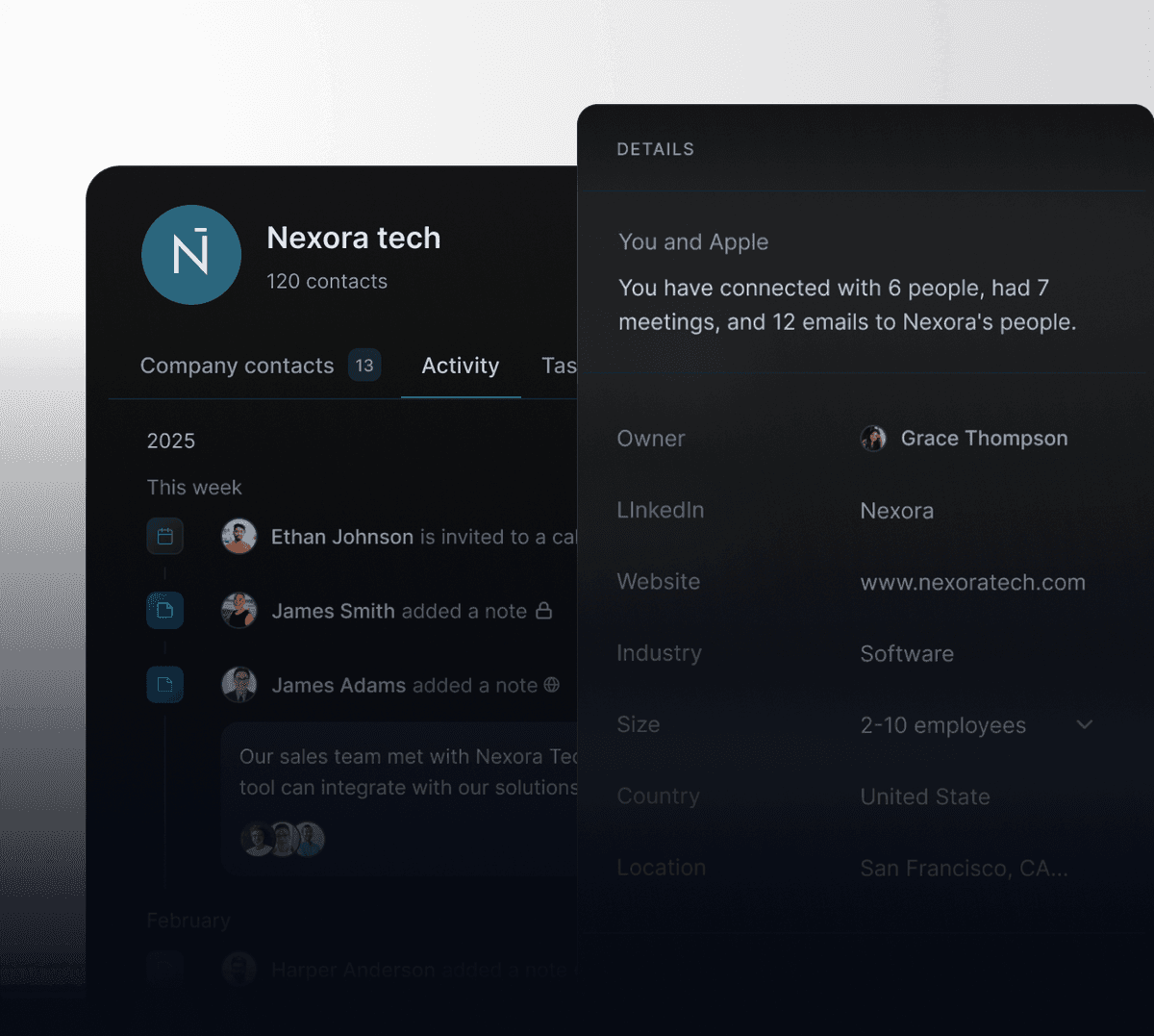
Key customer relationships often span multiple contacts, teams, and touchpoints. Rolodex brings everything into one unified view, helping your team stay aligned and informed.
Unified Relationship Records
Every contact at a key account sits on one record with full interaction history from Gmail and Outlook sync. Account reviews start from what happened rather than from what people remember.
Company-Level Overview
The company profile aggregates every touchpoint across your organization — sales, success, support, and executive. You can see the whole relationship rather than one team's slice of it.
Collaborative Workspace
Account managers, executives, and success teams work from the same shared record, so nobody contacts a customer without knowing what was said last week.
Maintain High-Touch Engagement
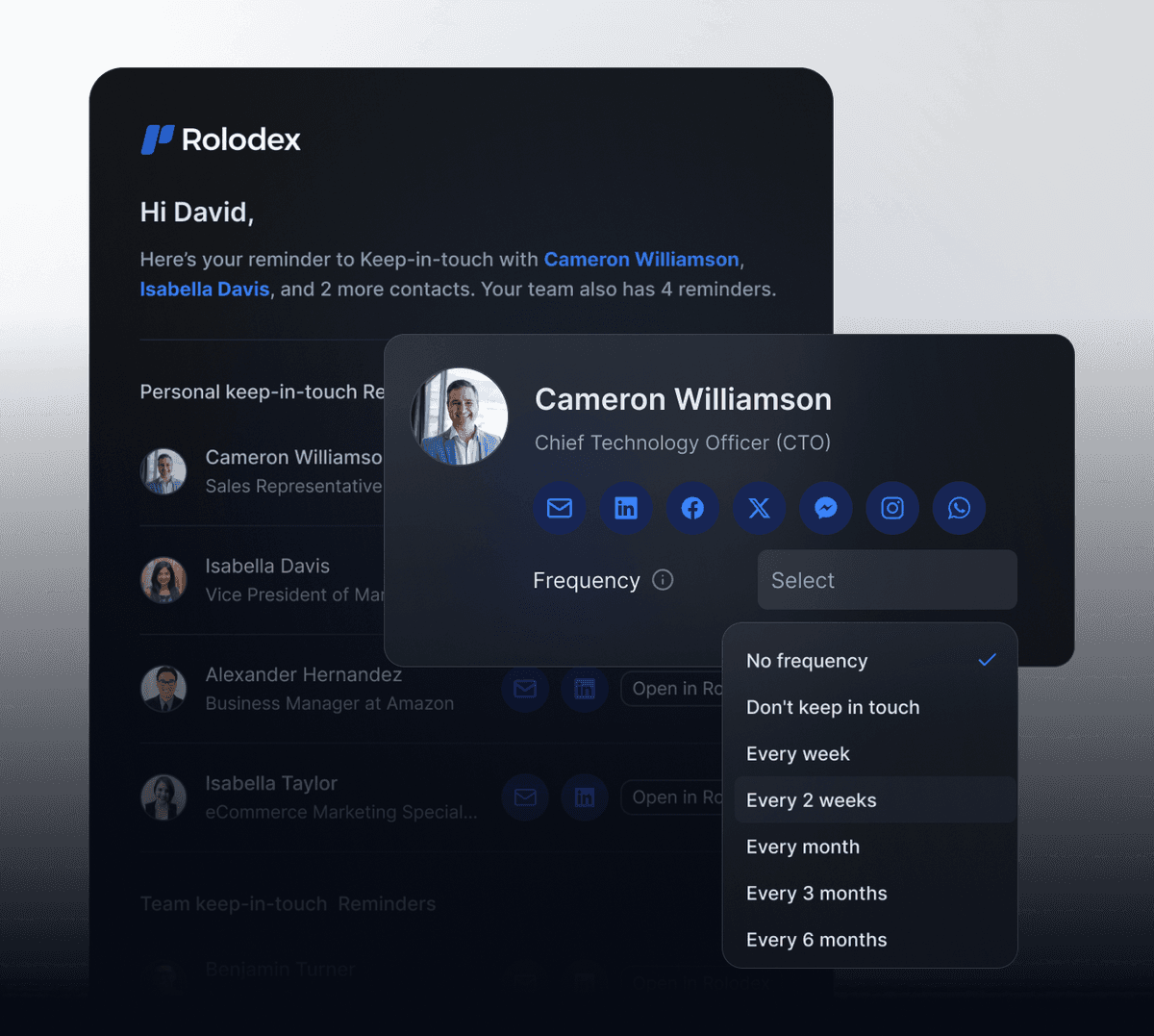
Key accounts need ongoing, proactive engagement. Rolodex ensures no relationship goes cold—even when things get busy.
Automated Keep-in-touch Reminders
Set contact cadences for each stakeholder so engagement is scheduled rather than reactive. Accounts are usually lost gradually and quietly, not suddenly.
Collaborative Notes & Tasks
Notes and follow-ups live on the account and are visible to everyone working it. A commitment made on a QBR call is tracked where the next person will see it.
Engagement Tracking
Filter for stakeholders with no contact in 60 or 90 days. Declining engagement is the earliest churn signal available, and it is visible long before a renewal conversation.
Organize Stakeholders Strategically
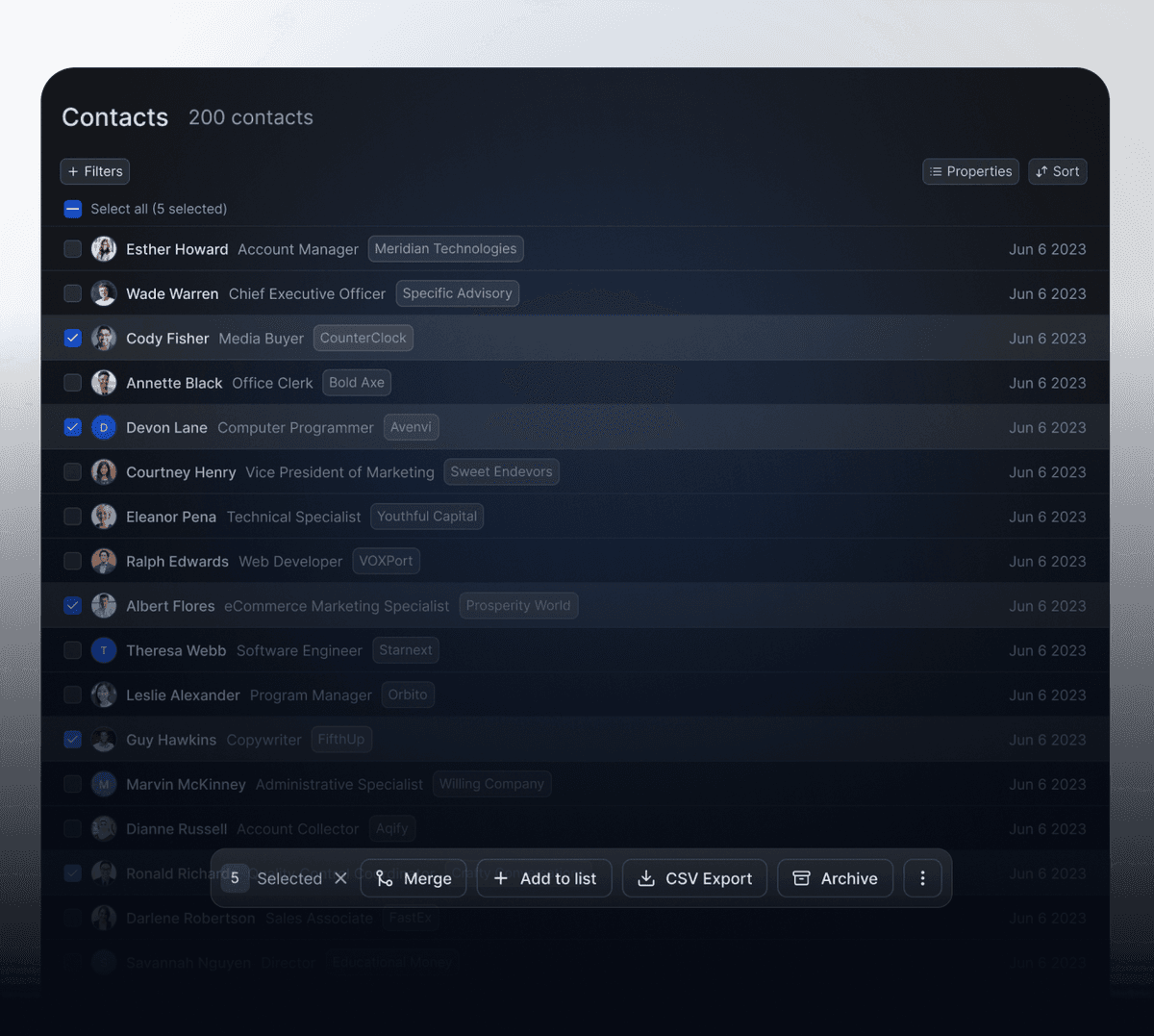
Managing key accounts requires structure. Rolodex lets you group, segment, and prioritize the right people inside customer organizations.
Tailored Lists and Tags
Tag stakeholders by role, influence, or sentiment and build lists per account. Executive briefings target the right people without rebuilding the list each time.
Custom Fields for Precision
Add the fields your account plans actually use — renewal date, contract value, expansion opportunity, risk level — and filter across accounts on them.
Shared Visibility Across Teams
Support, success, and sales see the same stakeholder map, so the customer gets one coherent relationship rather than three disconnected ones.
Visualize Key Account Structures
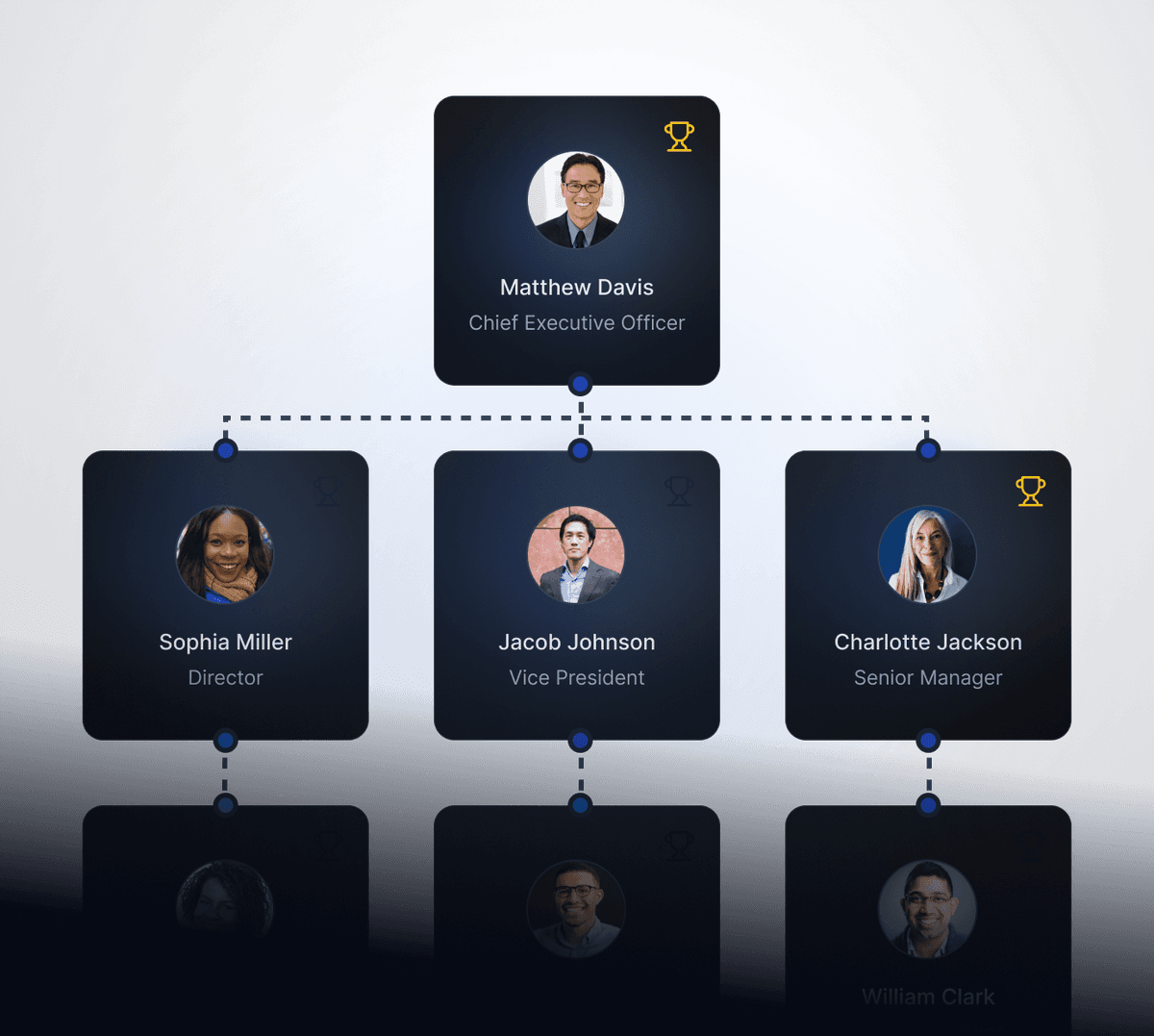
Understanding your customer's internal hierarchy is crucial to expanding the relationship. Rolodex helps you map and engage the right people.
Org Charts Made Simple
Interactive org charts show reporting lines inside the customer and which of your colleagues owns each relationship. Coverage gaps become visible at a glance.
Highlight Decision-Makers
Mark economic buyers, champions, and blockers on the org chart so renewal and expansion conversations start with the right people.
Multi-Threading Made Easy
Build relationships across several stakeholders rather than depending on one champion. An account held together by a single contact is one resignation away from a churn risk.
Frequently asked questions
What is key account management software?
Key account management software helps teams manage their most valuable customer relationships by tracking every stakeholder in an account, their engagement history, and the org structure connecting them.
How is key account management different from a CRM?
A CRM is generally organized around deals and pipeline. Key account management is organized around the people inside an account — who knows whom, who has influence, and where relationship coverage is thin.
Can Rolodex show which accounts are at risk?
Rolodex surfaces engagement gaps — stakeholders with no recent contact, accounts dependent on one relationship, and champions who have changed jobs — which are the leading indicators of account risk.