CRM for Consultants: Activate Alumni and Client Networks
Consulting firms generate most of their business from people they already know. Former colleagues now at client organizations. Alumni from previous engagements. Contacts who have moved into decision-making roles at target accounts. The network is there. The problem is that it exists across dozens of individual inboxes, LinkedIn connections, and personal contact lists, invisible to the rest of the firm.
Most consulting CRM conversations focus on pipeline tracking. This one starts earlier: the relationship work that happens before there is a formal opportunity to track. Rolodex functions as a lightweight CRM for consultants that consolidates your team's alumni and client relationships into one shared workspace, surfaces the warmest path to any contact, and makes relationship context visible across the whole firm.
This is what client relationship management looks like when it is built on relationship intelligence rather than pipeline stages.
How a consulting team uses relationship management on a typical workday
A partner at a mid-size strategy firm opens Rolodex on Tuesday morning. Three things are waiting.
A Title Alert shows that Marcus, a former engagement manager who moved to a Director role at a target account two months ago, just got promoted to VP of Strategy. She flags this for a teammate who worked closely with Marcus last year and asks for a warm introduction. The note she attaches: "Marcus is probably scoping the next operating model initiative. Can you send him a short note?"
Her manager uses the Org Chart to map stakeholders at an account the firm has been trying to expand into for six months. He can see that the CFO they have been speaking to recently hired a VP of Finance who joined from a firm that Rolodex shows three partners have a first-degree connection to. He requests an introduction through the strongest tie.
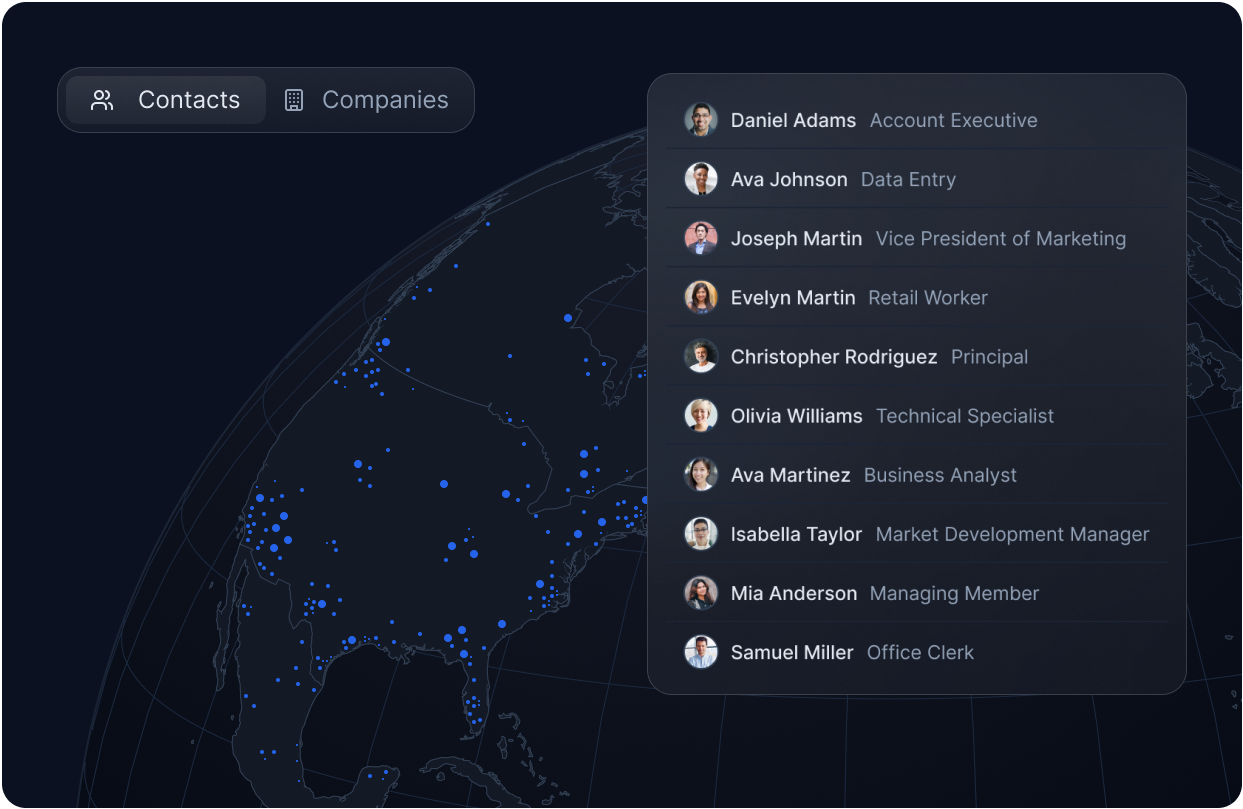
A BD lead pulls up Map View, filters by Chicago, and builds a roster of 11 contacts across three target accounts who will be in the city during her trip next week. She books dinners around two cluster meetings and uses the Keep in Touch queue to prepare context for each conversation.
Three different workflows, each starting from the firm's existing network rather than a cold list.
Why alumni and client relationships are your firm's best business development asset
Most consulting firms underestimate the reach of their collective network. Individual partners know their own contacts. Senior managers track their own alumni. But the full map, who went where, who knows whom, and which relationships are still warm, lives scattered and invisible.
Relationship intelligence changes that. In Rolodex, once email, calendar, and LinkedIn are connected across the team, a partner searching for contacts at a target account can see not just their own connections but the firm's collective reach: the junior analyst from the 2019 engagement who is now a Director of Operations, the former client who moved to a new company two years ago, the MBA classmate a principal has been emailing quarterly.
Alumni network management is one of the highest-ROI activities in professional services business development. Former colleagues trust you. Former clients know what you deliver. A well-timed message from someone they already have a relationship with converts at rates that cold outreach cannot approach.
How to build a shared CRM for your consulting firm's relationships
Consolidating a firm's network into a shared consulting CRM typically takes two steps: connection and organization.
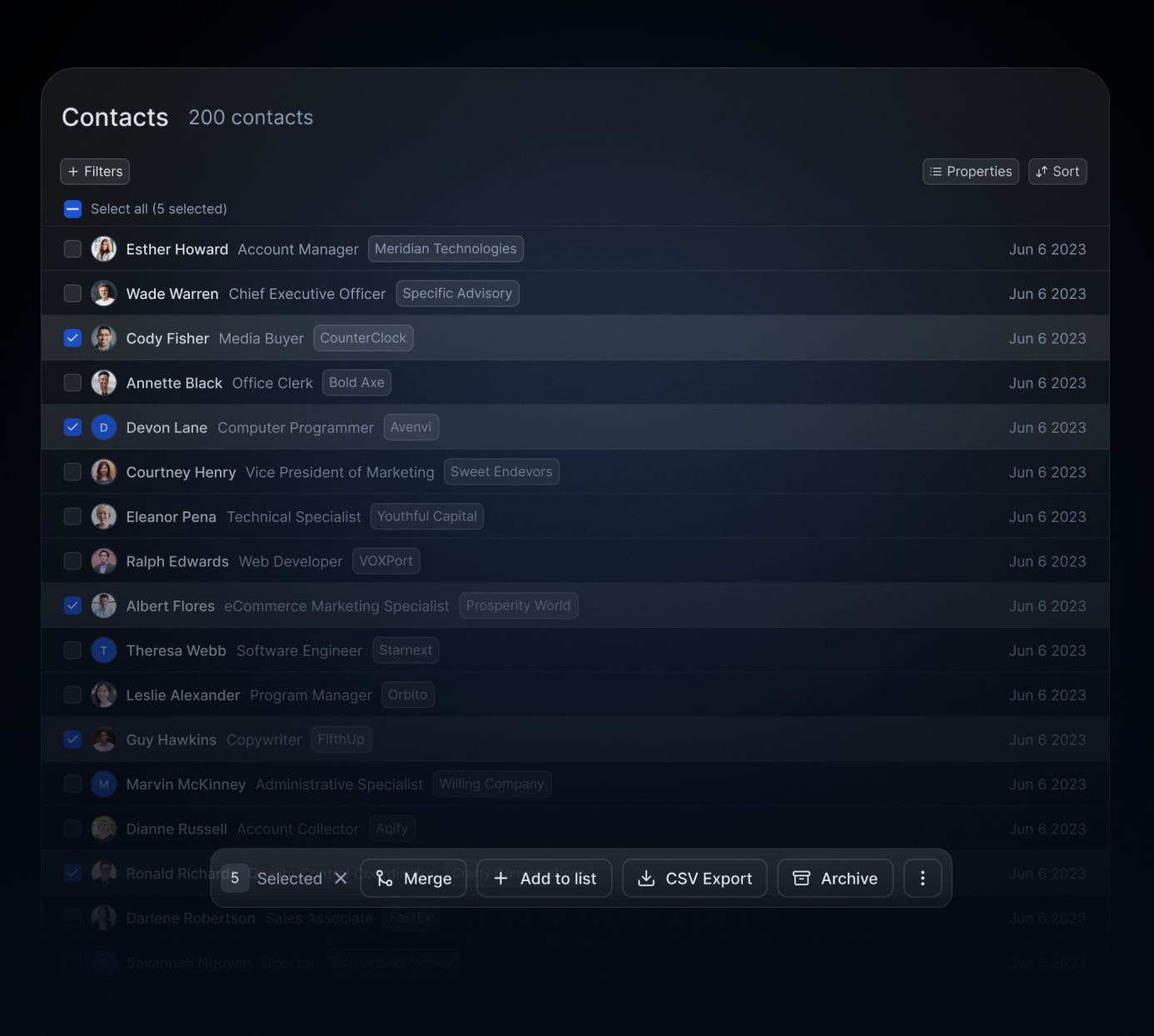
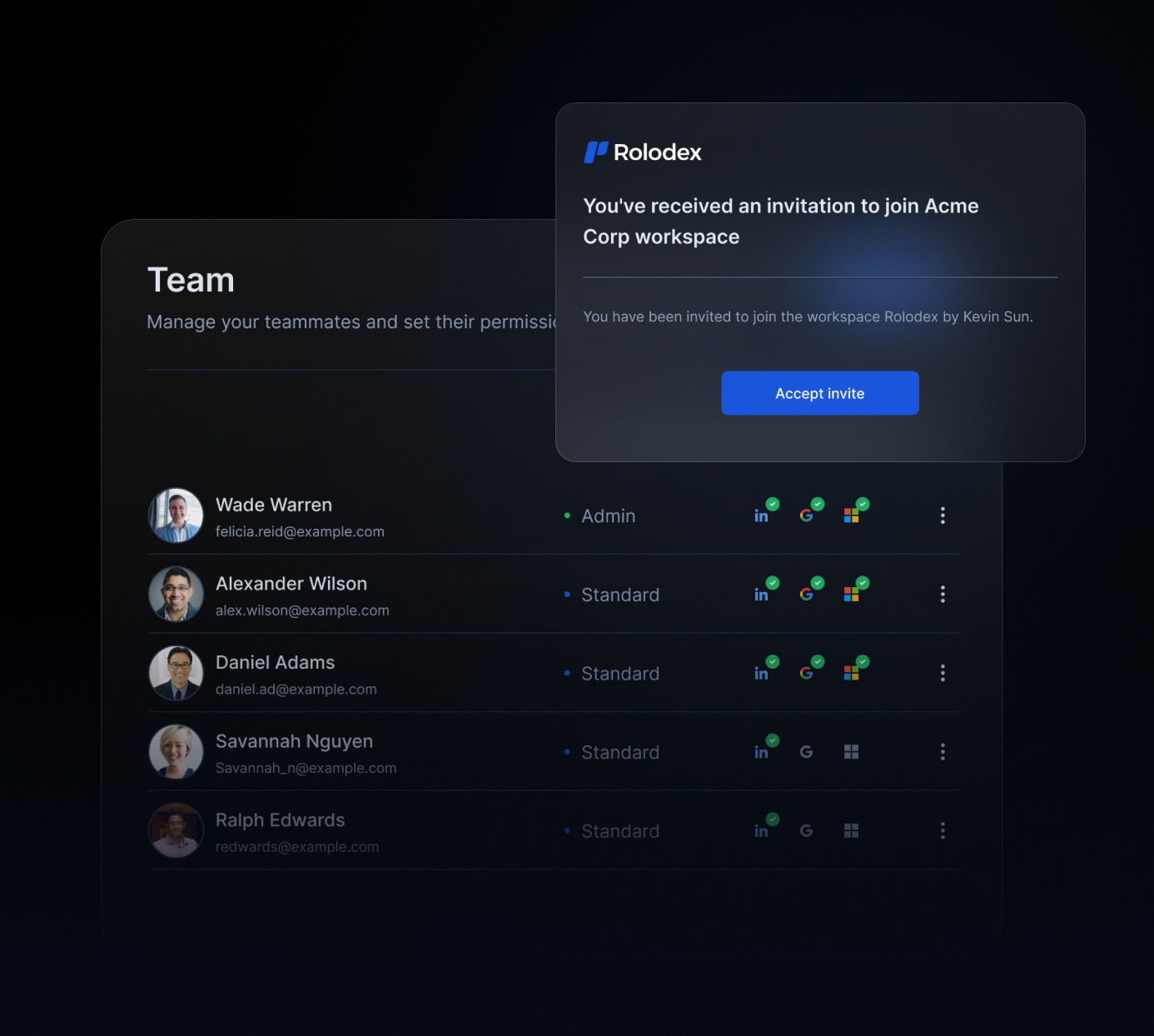
Connection. When team members connect their email and LinkedIn to Rolodex, the system consolidates and deduplicates contacts across the firm. Contacts that appear in multiple inboxes are merged rather than duplicated. The result is a single shared view of everyone the firm has a meaningful relationship with, organized by company, seniority, industry, function, and geography.
Organization. Tags, custom fields, and Lists let teams structure contacts in ways that map to how consulting business development actually works: alumni cohort, engagement history, current account status, relationship owner, introduction status. Once organized, the shared workspace shows at a glance which relationships are warm, which have gone cold, and which contacts have recently changed roles, all signals that are relevant to business development timing.
Contact notes, email recaps, and engagement history attach directly to contact profiles rather than staying buried in project folders. When a partner hands off a relationship, the context travels with it. When a new associate joins the team, they can see the full history of the firm's relationships rather than starting blind.
For a fuller picture of how relationship intelligence frameworks work in professional services, this primer on relationship intelligence covers the underlying approach.
How to run warm introductions for consulting business development
The warmest path to a new client is almost always through someone who already knows them. Warm introductions work in consulting for the same reason they work everywhere: they transfer trust. A partner who asks for a double opt-in introduction from a trusted mutual contact compresses the first two or three meetings that cold outreach usually requires.
In Rolodex, every contact record shows who on the team has the strongest connection to that person, the teammate who worked with them, the principal who exchanged emails regularly, the advisor who knows them from a board. When a business development target appears, you find the warmest path before sending anything.
The mechanics of a good introduction matter. A short, forwardable note that the introducer can send with one click, a clear reason why the introduction makes sense for both parties, and a double opt-in so the recipient is not put in an awkward position. The complete warm introduction guide covers all of this, including templates for consulting and professional services contexts.
For account expansion, the Org Chart feature maps the relationship structure inside a client or target organization. When a firm is single-threaded on a key account, all communication running through one sponsor, Org Chart surfaces economic buyers and influencers at other levels. A partner can see who else in the client organization has a warm path from someone on the team, then plan a multithreading motion through introductions rather than cold outreach.
Field tactics: job change signals, Map View, and targeted outreach
Three field tactics that rely on the shared network layer rather than manual tracking.
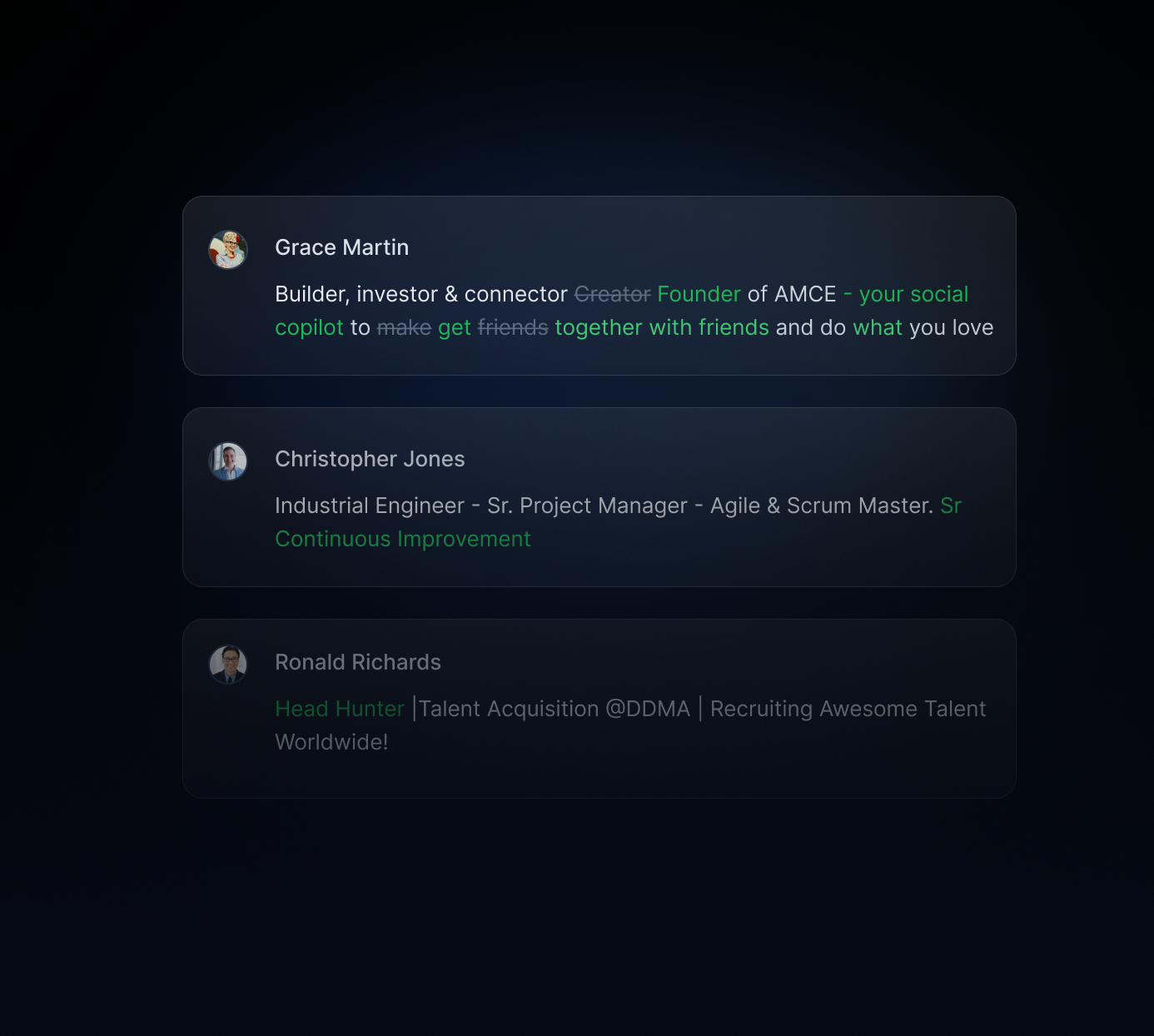
Job change signals. When a contact in the firm's network updates their title or company on LinkedIn, Rolodex fires a Title Alert. For a consulting firm, these signals are business development timing opportunities: a former client who just became a CPO at a target account, an alumni partner who moved to a company the firm has been trying to reach, a portfolio company that just hired a COO with a track record in the firm's practice area. A "congrats on the new role" follow-up from someone who worked with them five years ago lands differently than any cold message could. How title change signals work across a consulting firm's network is covered in full in the signals guide.
Map View for city trips. Partners who travel use Map View to plan meetings around contacts Rolodex shows are located in each city. Filter by city, seniority, account status, and relationship warmth and you get a short list of conversations worth scheduling around a trip. The Map View tactics guide covers the full workflow for building a meeting roster from a travel schedule.
Targeted dinners. Invite six to eight people who have a reason to know each other, not a generic networking event but a curated group around a practice area theme, a sector challenge, or a geography. Rolodex shows which contacts in a given city share relevant backgrounds. The dinner becomes a relationship moment, not a sales pitch.
Build a consulting CRM from the relationships your firm already has
A CRM for consulting firms should do more than log opportunities. It should surface who the firm knows, how warm the path is, and who can make the introduction before there is a formal engagement to track. That is what shifts business development from cold outreach to coordinated relationship management.
The firms that do this well share three things: a shared consulting CRM where alumni and client relationships are visible across the whole team, a consistent process for warm introductions and account follow-up, and a system of signals, title changes, role moves, contact notes, that shows when the timing is right.
Rolodex is built for exactly this. One workspace where the firm's relationship history, alumni network, and client context live together so that business development starts from a warm foundation rather than a cold list.
Sign up for Rolodex and have your consulting CRM running this week.